
EPC for Listed Buildings in Slough: The 2026 Guide to Compliance and Exemptions
Owning a piece of Slough's history no longer grants you an automatic pass from energy regulations. The blanket exemption for heritage assets has been removed. This means securing an EPC for listed buildings Slough is now a mandatory step for most owners looking to sell or let in 2026. It's a stressful shift. You're likely caught between strict conservation rules and new environmental mandates. You want to preserve your property's character without facing legal penalties from Slough Trading Standards.
This guide provides the legal certainty you need. You'll discover exactly when your property requires certification and how to manage the "unacceptable alteration" clause to protect historic fabric. We'll outline a roadmap for improving energy ratings whilst maintaining full compliance with local heritage protections. We preview the new 2026 headline metrics and help you find an assessor who understands historic architecture. Get the facts. Secure your compliance. Move forward with confidence.
Key Takeaways
- Debunk the blanket exemption myth. Understand the "Unacceptable Alteration" rule to protect your property's character.
- Beat the RdSAP software bias. Learn how solid wall assessments impact your rating and how to mitigate negative scores.
- Navigate Slough Borough Council conservation rules. Secure Listed Building Consent for energy upgrades whilst protecting heritage features.
- Partner with local experts. Get a professional EPC for listed buildings Slough that respects historic architecture.
- Streamline your compliance process. Ensure access to lofts and cellars for a faster, more accurate energy report.
Does Your Listed Building in Slough Actually Need an EPC?
Many Slough property owners believe a Grade II listing is an automatic pass for energy compliance. It isn't. The 2026 regulatory landscape has shifted significantly. Securing an EPC for listed buildings Slough is now a standard requirement for most heritage assets when they are sold or let. You cannot simply assume you are exempt. Slough Trading Standards requires documented proof of your status. Without a valid Energy Performance Certificate (EPC), you risk significant fines when marketing your property.
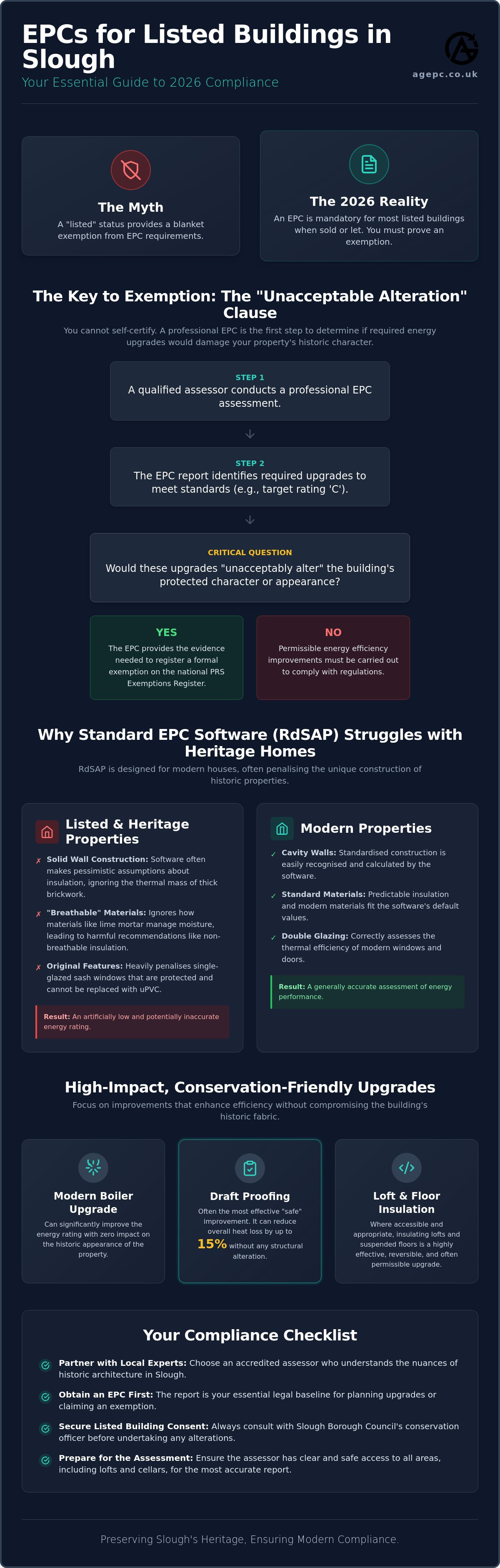
The core of the exemption lies in the "unacceptable alteration" clause. This rule applies if the energy improvements needed to reach a 'C' rating would ruin the building's historic character. However, you need a professional assessment to prove those improvements are damaging. You cannot self-certify. A formal EPC for listed buildings Slough provides the essential evidence required to register an exemption on the national PRS Exemptions Register.
Understanding the 'Protected Building' Exemption Criteria
The 2012 Energy Performance of Buildings Regulations are specific. Buildings protected as part of a designated environment may avoid an EPC if compliance unacceptably alters their appearance. Minimum energy efficiency standards (MEES) apply differently to Slough heritage sites. The EPC identifies specific improvements, such as solar panels or external wall insulation. If these measures are prohibited by your local conservation officer, they are deemed "unacceptable". Your EPC serves as the legal baseline for this claim.
When an EPC Becomes Mandatory for Historic Homes
Specific transactions trigger the requirement. If you are selling or letting a property in Slough, you must have an EPC at the point of marketing. The previous 28-day grace period has been removed for 2026. Most listed buildings still require an EPC because many energy improvements do not affect historic character. Loft insulation or modern boiler upgrades are often permissible. An expired certificate can halt a property sale in Windsor or Maidenhead. Lenders now demand energy cost transparency before approving mortgages on heritage sites.
The Unique Challenges of EPC Assessments for Slough’s Heritage Properties
Standard energy assessment software often fails to understand historic architecture. Most certificates are generated using RdSAP (Reduced Data Standard Assessment Procedure), a system designed for modern, mass-produced housing. When generating an EPC for listed buildings Slough, this software frequently defaults to "assumed" values for wall thickness and insulation. For a Georgian townhouse or a Victorian terrace in Slough, these assumptions are almost always pessimistic. They penalise older properties for their solid wall construction without accounting for the natural thermal mass of thick brickwork.
The 'Solid Wall' dilemma is a primary hurdle. Unlike modern cavity walls, Slough's heritage properties were built to be "breathable." They manage moisture by allowing it to evaporate through porous materials like lime mortar and timber. Standard EPC recommendations often suggest internal wall insulation or rendering. In a Grade II listed cottage, these non-breathable modern materials trap moisture, leading to structural damp and timber rot. A generic assessment might miss the distinction between original fabric and modern additions, resulting in a rating that is both low and legally problematic. For accurate compliance, you can book an accredited assessment that respects these architectural nuances.
Maintaining the physical health of these structures is just as important as the assessment itself; specialist services like Surfprep offer delicate restoration for wooden beams and stone cleaning that preserves the building's historic character.
How Listed Status Impacts the Final Energy Rating
Single-glazed sash windows are a hallmark of Slough’s historic districts, but they are an "E" rating's worst enemy. Standard software treats these as major heat-loss points. Because you cannot simply swap them for uPVC double glazing without breaching heritage laws, your score remains suppressed. The UK Government Landlord Guidance acknowledges that some improvements are technically possible but legally prohibited. A heritage-aware assessment identifies these conflicts early, ensuring your final rating reflects the reality of what can actually be changed.
Why Standard Energy Recommendations Often Fail Historic Buildings
Standard EPC reports frequently recommend solar panels or heat pumps. For most listed properties in Berkshire, these are rejected by conservation officers for being too visually intrusive. This creates a compliance trap. You are told to improve the rating, but the methods suggested are illegal under your listing. Draft proofing remains the most effective "safe" improvement. It reduces heat loss by up to 15% without altering the building's character. Focus on high-impact, low-visibility changes to satisfy both the energy assessor and the local planning department.
Improving Energy Efficiency Whilst Navigating Slough Conservation Rules
Balancing Minimum Energy Efficiency Standards (MEES) with heritage law is a delicate task. Slough Borough Council planning rules often restrict the very measures an energy assessor recommends. This creates a legal paradox. You must improve your rating to rent out your property, yet many improvements require Listed Building Consent. Carrying out works without this consent is a criminal offence. You need a strategy that satisfies both Slough Trading Standards and your local conservation officer.
Start by identifying "middle ground" solutions. These are upgrades that improve your EPC for listed buildings Slough without altering the building's fabric. If a measure is deemed too intrusive or expensive, you can apply for a "High Cost" or "Wall Insulation" exemption. This requires registering your property on the national PRS register with supporting evidence. To ensure your property meets all requirements without the stress, book a professional compliance assessment today.
Permitted Energy Improvements for Grade II Listed Buildings
Slough planners rarely allow double glazing in historic frames. Secondary glazing is the preferred alternative. It offers similar thermal benefits whilst remaining entirely reversible. Modern boiler upgrades and air-source heat pumps are often permissible, provided the external units are discreetly placed. Floor and loft insulation are the most effective low-impact ways to boost your score. Use natural, breathable materials like sheep's wool to avoid damp issues common in Berkshire's older stock.
How to Secure an EPC Exemption for a Slough Rental
If your property cannot reach an 'E' rating despite all permissible works, you must register an exemption. This process isn't automatic. You'll need a report from a qualified surveyor or a formal refusal letter from the Slough conservation office. This evidence proves that the required works would unacceptably impact the building's character. Under the 2026 framework, these registered exemptions now last for ten years on the national PRS register. You must re-apply or demonstrate new compliance efforts once this period ends.
Securing Your Slough EPC: Professional Assessments and Compliance
Local knowledge is non-negotiable for heritage properties. An assessor who doesn't understand Slough's specific building stock will likely default to incorrect "assumed" values. This directly hurts your rating. It complicates your legal standing with Trading Standards. Choosing a specialist ensures your EPC for listed buildings Slough is accurate from the start. Precision removes friction. It provides the peace of mind you need when managing a complex historic asset.
Efficiency is key for Slough landlords and sellers. A one-stop-shop approach reduces administrative stress. Combining your EPC for listed buildings Slough with PAT testing, professional photography, and floor plans streamlines your marketing process. It's faster. It's more cost-effective. You receive a comprehensive compliance pack in a single visit, allowing you to focus on your property transaction rather than paperwork.
Why Specialist Accredited Assessors are Essential in Slough
Accurate data entry is the difference between a pass and a legal headache. Non-standard materials like lime mortar or timber frames require manual overrides in the assessment software. AG Property Services provides accredited experts who understand these architectural nuances. We don't just tick boxes. We verify the actual fabric of your building to ensure the rating is fair and representative. This expertise prevents the unfair penalties often associated with automated software defaults.
Preparing Your Historic Slough Property for an Assessment
Preparation saves time and improves results. Gather your records before the assessor arrives. Have previous planning consents, insulation invoices, and window specifications ready for inspection. If the assessor can't see the improvement or the evidence, they can't include it in the report. Ensure clear access to all areas of the property:
- Lofts and Attics: Clear the hatch for insulation thickness checks.
- Cellars and Basements: Ensure floor construction is visible.
- Boiler Rooms: Provide access to the data plate on your heating system.
- Lighting: Ensure all fixed light fittings have bulbs, as missing bulbs are penalised.
Look ahead to the 2030 roadmap. By October 2030, all privately rented properties will need a 'C' rating. Use your 2026 assessment as a strategic guide. Identify low-impact upgrades now. Register your exemptions early if the target remains unreachable due to heritage constraints. Secure your property's compliance today to avoid the rush of future deadlines.
Future-Proof Your Slough Heritage Asset
Securing an EPC for listed buildings Slough is the first step toward total property compliance in 2026. You now understand that a Grade II listing doesn't offer a free pass from energy regulations; it simply changes the rules of engagement. By identifying "middle ground" improvements and registering valid exemptions, you protect your property's character whilst avoiding heavy legal penalties. Accurate data is your best defence against unfair ratings.
Expertise removes the friction from these complex tasks. Our accredited local assessors serve Slough, Windsor, and Maidenhead with a focus on precision and speed. Whether you need a domestic EPC, commercial certification, or a full compliance package including PAT and inventories, we provide the grounded authority your property deserves. Don't let shifting regulations stall your next transaction.
Book your Slough listed building EPC assessment today with AG Property Services and gain the legal certainty you need. Move forward with a partner who values your time and respects your property's history. Your roadmap to 2030 starts here.
Frequently Asked Questions
Are all Grade II listed buildings in Slough exempt from EPCs?
No, Grade II listed buildings aren't automatically exempt. You only qualify for an exemption if the energy improvements required would unacceptably alter the building's character or appearance. In 2026, an EPC for listed buildings Slough is generally required to prove which works are permissible and which are not. You must have a certificate or a registered exemption to market the property legally.
Can I rent out a listed building in Slough with an EPC rating of F or G?
You cannot legally rent out a property with an F or G rating unless you've registered a valid exemption. Under Minimum Energy Efficiency Standards (MEES), landlords must work toward a 'C' rating by 2030. If your listed status prevents these upgrades, you must submit evidence to the PRS Exemptions Register to avoid significant fines from local authorities.
How long does an EPC assessment take for a large historic property in Windsor?
A large historic property typically requires 90 to 120 minutes for a thorough inspection. Historic buildings in Windsor or Slough often feature complex layouts and non-standard materials that require careful documentation. This ensures your assessor captures every detail accurately, from solid wall thickness to specific heating controls, preventing pessimistic software defaults.
What happens if I cannot improve my listed building's EPC rating due to planning rules?
You should apply for a "Listed Building Consent" refusal or obtain a specialist surveyor's report to prove the impasse. Once you have this evidence, you can register a "consent" or "high cost" exemption on the national register. This protects you from MEES penalties whilst keeping your property's historic fabric intact and legally compliant.
Who is responsible for the EPC when selling a listed property in Slough?
The seller is legally responsible for providing a valid EPC at the start of the marketing process. This duty applies even if you believe the property qualifies for an exemption under heritage rules. Having a professional EPC for listed buildings Slough ready ensures your sale proceeds without delays from solicitors, buyers, or mortgage lenders.
How much does it cost to register an EPC exemption for a listed building?
It is currently free to register an exemption on the UK Government’s PRS Exemptions Register. You'll need to cover the costs of the professional assessments and surveyor reports required to support your claim. These documents provide the necessary proof that improvements are either technically impossible, prohibitively expensive, or legally prohibited by conservation officers.
Important Information
The information provided in this article is for general guidance and information purposes only and does not constitute legal, financial, or professional property advice. While AG Site Solutions aims to keep all content accurate and up to date, property regulations, landlord obligations, EPC requirements, and housing legislation may change over time. Readers should always seek professional advice or consult the relevant authorities before making decisions relating to property compliance, tenancy matters, Energy Performance Certificates (EPCs), landlord responsibilities, or legal obligations. Some articles may be created or assisted using AI-supported content tools and are reviewed and enhanced using real industry experience and property compliance knowledge. For professional assistance, quotations, or compliance support, please contact AG Site Solutions directly via agepc.co.uk