What should landlords check with their insurer when a rental property is empty between tenancies?
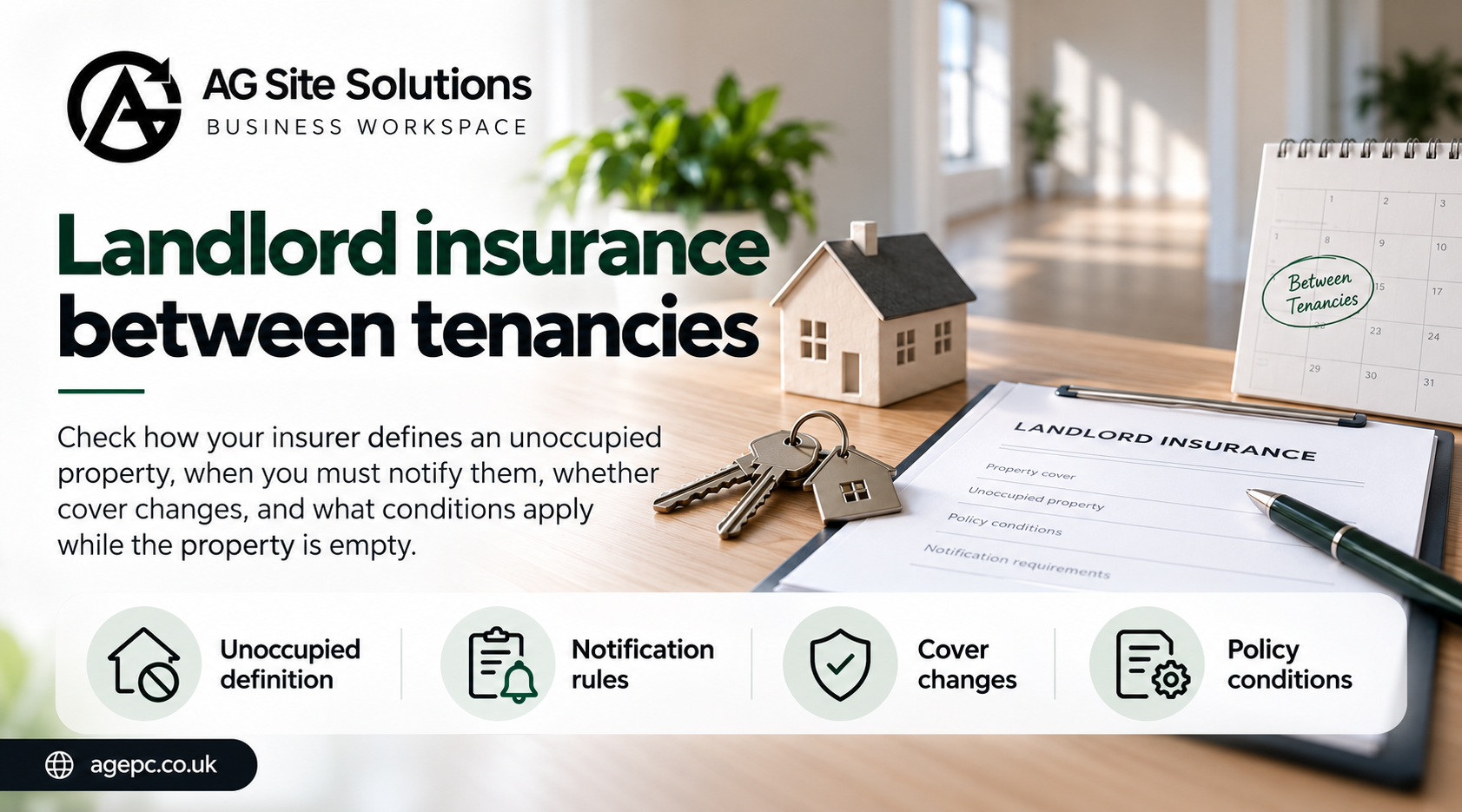
Before a tenancy gap, check how your insurer defines an unoccupied property, when you must notify them, whether your cover changes and what conditions apply while it is empty. For landlord insurance between tenancies, do not assume a standard vacancy threshold, inspection frequency or level of protection. Read your policy wording, schedule and endorsements, then obtain written clarification from your insurer or broker.
Key takeaways
- Give your insurer the expected vacancy dates and explain any uncertainty about the next tenancy.
- Ask which restrictions, exclusions and excesses apply—not simply whether the property remains insured.
- Confirm who may inspect the property, what they must check and what evidence to retain.
- Revisit the arrangements if repairs expand or the tenancy gap lasts longer than expected.
When does your insurer treat the property as unoccupied?
Start with the policy definition, rather than your own understanding of “empty”.
Explain the actual circumstances: when the outgoing tenant leaves, whether furniture remains, whether anyone will stay overnight and when the new tenant is expected. Ask which date the insurer uses to start any unoccupied period. Do not assume that leaving furniture behind or making occasional visits changes the property's status.
Questions to ask before the gap
- [ ] How does my policy define unoccupied, vacant or empty?
- [ ] When must I notify you, and by what method?
- [ ] What dates and details do you need?
- [ ] What should I do if the next move-in date is uncertain?
This approach is the same whether your rental is in Slough, Windsor or Maidenhead: check the individual policy, rather than assuming a town-specific insurance rule.
Will your cover change while the rental property is empty?
Ask for a clear explanation of what remains covered and on what terms.
Ask whether restrictions, exclusions or different excesses apply during the gap. Specifically query escape of water, theft, malicious damage and any landlord contents you leave behind. These are questions to resolve, not a prediction about your policy.
If the existing policy does not accommodate your plans, ask whether an amendment or separate unoccupied rental property insurance is appropriate. Request the proposed terms in writing before deciding. Check when any change takes effect and how the move back to an occupied tenancy will be handled.
> ASK MORE THAN “AM I COVERED?” — Ask the insurer to identify the relevant wording and explain any conditions attached to their answer. Keep that clarification with your policy documents.
What inspections and records does the insurer require?
Agree the visit arrangements before relying on an agent, contractor or inspection provider.
Ask whether visits are required, how frequently they must happen and whether someone must enter the property. Confirm what must be checked, who is acceptable to carry out visits and what happens if access is missed. Do not assume a routine tenancy inspection has the right scope for an empty property.
Ask what evidence the insurer expects. A practical record could include the visit date, visitor's name, observations, photographs where appropriate, and action taken on defects. Agree who receives reports and who follows up problems.
For documenting the tenancy handover, see Inventory, Check-In and Check-Out Reports in Bracknell: Which Do Landlords Need? Keep handover documentation separate from any insurer-specified vacancy checks.
What conditions apply to security, heating and water?
Get property-specific instructions instead of guessing which precautions are suitable.
- Security: must particular locks, alarms or other protections remain in use?
- Keys: are there requirements for key holders or contractor access?
- Heating: must it remain operational, and are settings specified?
- Water: should the supply remain on, be isolated or require other precautions?
- Utilities: could disconnecting a service affect an alarm or another required precaution?
If instructions are unclear or difficult to carry out, ask the insurer for clarification before changing anything. Use a suitable tradesperson where technical work is needed. Treat these empty rental property insurance checks as a policy-specific task list, not universal instructions.
Do repairs, contractors or a longer vacancy change the position?
Tell the insurer what you intend to do while the property is empty.
Describe the planned work and ask what information is needed about contractors, access, materials or changes to security. Do not assume decorating and substantial refurbishment are treated identically.
If work expands or a new tenancy falls through, contact the insurer or broker to check whether the existing arrangements still apply. Confirm revised dates and any changes in writing. Avoid treating the original acknowledgement as approval for a different situation.
What should you confirm before the next tenant moves in?
Close the gap with a clear record of both the insurance position and the handover.
Confirm the actual occupation date, any notification needed and whether temporary restrictions or amendments have ended. Keep the insurer's response alongside visit records and evidence of completed work.
At AG Site Solutions, we provide EPCs, floor plans, inventories, check-in and check-out reports for landlords and agents across Slough and the wider local area. Tell us which property documents you need for the next tenancy. An inspection, report or certificate does not automatically satisfy insurance conditions or establish overall legal compliance.
Build a vacancy file
- GatherBring together the policy documents and expected tenancy dates.
- AssignName the person responsible for each agreed precaution.
- MaintainKeep correspondence and records together as plans develop.
Before you end the insurer call
- Have I explained the actual circumstances?
- Do I understand the required actions?
- Have I requested written confirmation?
Arrange the EPC, floor plan or tenancy reports you need with AG Site Solutions. Share the property details and services required so we can discuss your booking.
Frequently asked questions
What if my broker's email appears to contradict the policy?
Ask them to reconcile the wording and confirm whether an insurer-issued amendment is needed. Do not leave conflicting instructions unresolved.
Can my letting agent speak to the insurer for me?
Ask the insurer what authority they need before discussing or changing your policy with the agent.
What if the flat has buildings insurance through a managing agent?
Ask the managing agent who handles vacancy notifications under that policy. Separately check any landlord cover you hold yourself.
Should I mention that I am marketing the property for sale as well?
Yes—describe both possible outcomes and ask whether a sale rather than a new letting affects the proposed arrangements.
What if the insurance renews during the gap?
Flag the vacancy when discussing renewal and ask whether the proposed renewal terms accommodate it.
What if the policyholder's name is wrong?
Ask the insurer or broker to check and correct the details, including whether the owner is an individual or a company.
Should I send tenant information to the insurer?
Ask which information is necessary and how to submit it securely, rather than forwarding an entire tenancy file.
What should I do if damage is discovered during a visit?
Follow the policy's incident-reporting instructions and contact the insurer for guidance. Avoid assuming that reporting can wait until the next tenancy.