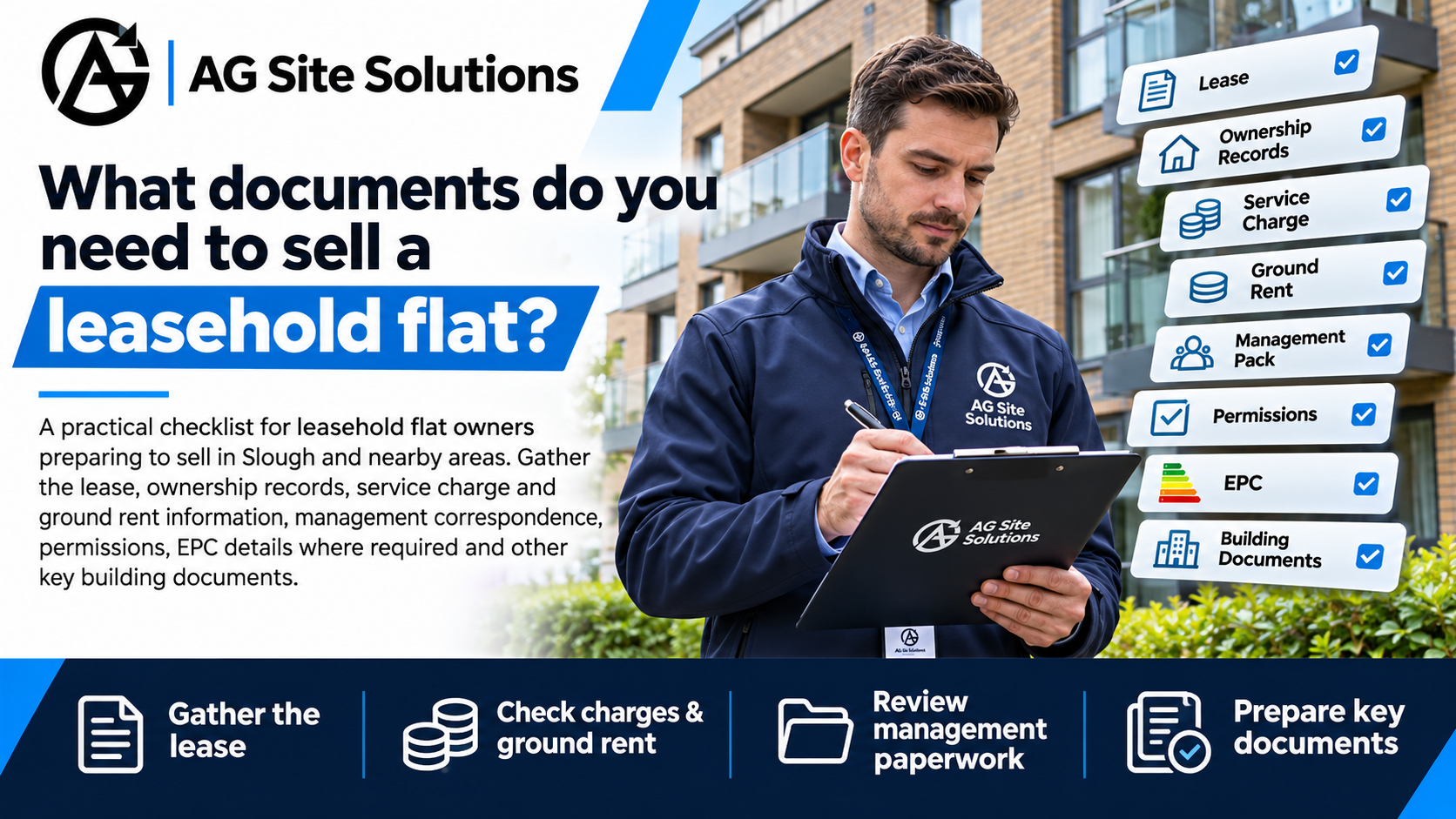
What paperwork should leasehold homeowners gather before putting their flat on the market?
Before putting a leasehold flat on the market in England, gather your lease and ownership records, service charge and ground rent information, management correspondence, relevant permissions, an EPC where required, and any applicable building documents. Start with what you already hold: your conveyancer can identify gaps, obtain title records and arrange requests to the freeholder or managing agent. The leasehold flat sale documents you need depend on the lease, building and transaction, so missing paperwork is something to discuss—not guess at.
Key takeaways
- Keep lease extensions and deeds of variation alongside the original lease.
- Your own statements and correspondence are useful, but do not replace current management information.
- Alteration consent, planning permission and building regulations documents serve different purposes.
- Check EPC availability before marketing, rather than leaving it until a buyer asks.
Start with your lease and ownership documents
Your purchase file is a useful starting point, whether it is a folder of papers or emails from your previous solicitor.
- The lease, including its plan and any schedules.
- Lease extensions, deeds of variation and other documents changing the original terms.
- Title documents and the report your conveyancer supplied when you bought.
- Any share-of-freehold records or management company membership or share certificate.
Send what you have, even if it looks incomplete. Your conveyancer can obtain current registered title information and check which filed documents are available through HM Land Registry. An old purchase file is background information, not a substitute for current checks. See HM Land Registry’s property information guidance.
> KEEP LATER CHANGES WITH THE ORIGINAL LEASE — Do not assume the original lease tells the whole story. Flag any extension, changed ground rent terms or altered parking arrangement to your conveyancer.
Gather the financial and management information
Collect records that explain the flat’s running charges and what is happening in the building.
Useful records you may already hold
- [ ] Recent service charge demands, statements, accounts and budgets.
- [ ] Ground rent demands or statements, where applicable.
- [ ] Payment records and correspondence about disputed charges or outstanding balances.
- [ ] Major works notices, estimates and letters about planned expenditure.
- [ ] Buildings insurance schedules or summaries supplied by the managing agent.
- [ ] Relevant meeting minutes and correspondence about repairs, disputes or management changes.
Include unresolved matters as well as completed work. Label estimates and proposals clearly so they are not mistaken for final charges. Your conveyancer can establish which figures need updating or clarification; GOV.UK’s How to sell a home guide explains why leasehold and service charge information matters.
If your paperwork includes consultation notices, our related guide explains When must block managers consult leaseholders before major works in England and Wales? This seller checklist itself covers England.
Understand the leasehold management information pack
Your own records help explain the property’s history; the management pack supplies information for the sale.
A leasehold management pack is information supplied for the transaction by the freeholder, managing agent or management company, as appropriate. It commonly addresses charges, insurance, planned works and arrangements affecting a sale. Contents vary: it is not a universal certificate or proof of full property compliance. GOV.UK’s selling guide recommends discussing leasehold information with your legal representative early.
Who gathers what?
| Source | Practical role |
| --- | --- |
| You | Provide existing records and the contact details for whoever manages the building. |
| Your conveyancer | Checks what is needed, obtains title information and coordinates enquiries. |
| Freeholder or managing agent | Supplies management information and supporting documents relevant to its role. |
Ask your conveyancer who should order the pack before requesting it yourself. If separate organisations collect ground rent and service charges, give details for both. Preparation helps identify gaps, but cannot guarantee a faster sale.
Find permissions, the EPC and relevant building documents
Keep records of changes to your flat separate from information about the wider building.
For alterations, gather any freeholder’s consent or licence to alter, planning documents, building regulations approvals or completion certificates, and warranties you hold. These have different purposes: one does not automatically replace another. Whether they were needed depends on the work and lease; ask your conveyancer to assess gaps before seeking replacement approvals. GOV.UK’s selling guide covers preparation of permissions and certificates.
Check the EPC before marketing. GOV.UK states that an EPC must be ordered before a property is marketed for sale, unless an exemption applies. Check whether a valid certificate already exists and whether it covers your flat. AG Site Solutions provides EPCs and EPC + Floor Plan services in Slough, Windsor, Maidenhead, Reading and nearby areas. See official EPC guidance.
Also pass on building safety or remediation correspondence and any landlord’s certificate or leaseholder deed of certificate already held. Their relevance depends on the building and circumstances; they are not a standard requirement for every flat. Your conveyancer should assess applicability using the government’s leaseholder protections guidance.
Prepare information for your conveyancer’s sale forms
Organised records make it easier to give clear answers without relying on memory.
Your conveyancer will provide the relevant property and leasehold information forms. Prepare notes on alterations, notices received, disputes, ongoing repairs and items you intend to leave. Cross-reference supporting emails or documents rather than trying to summarise everything from memory.
> FLAG UNCERTAINTY RATHER THAN GUESSING — If a date, consent or charge is unclear, tell your conveyancer. Distinguish what you know personally from information supplied by someone else, and ask how to answer the form accurately.
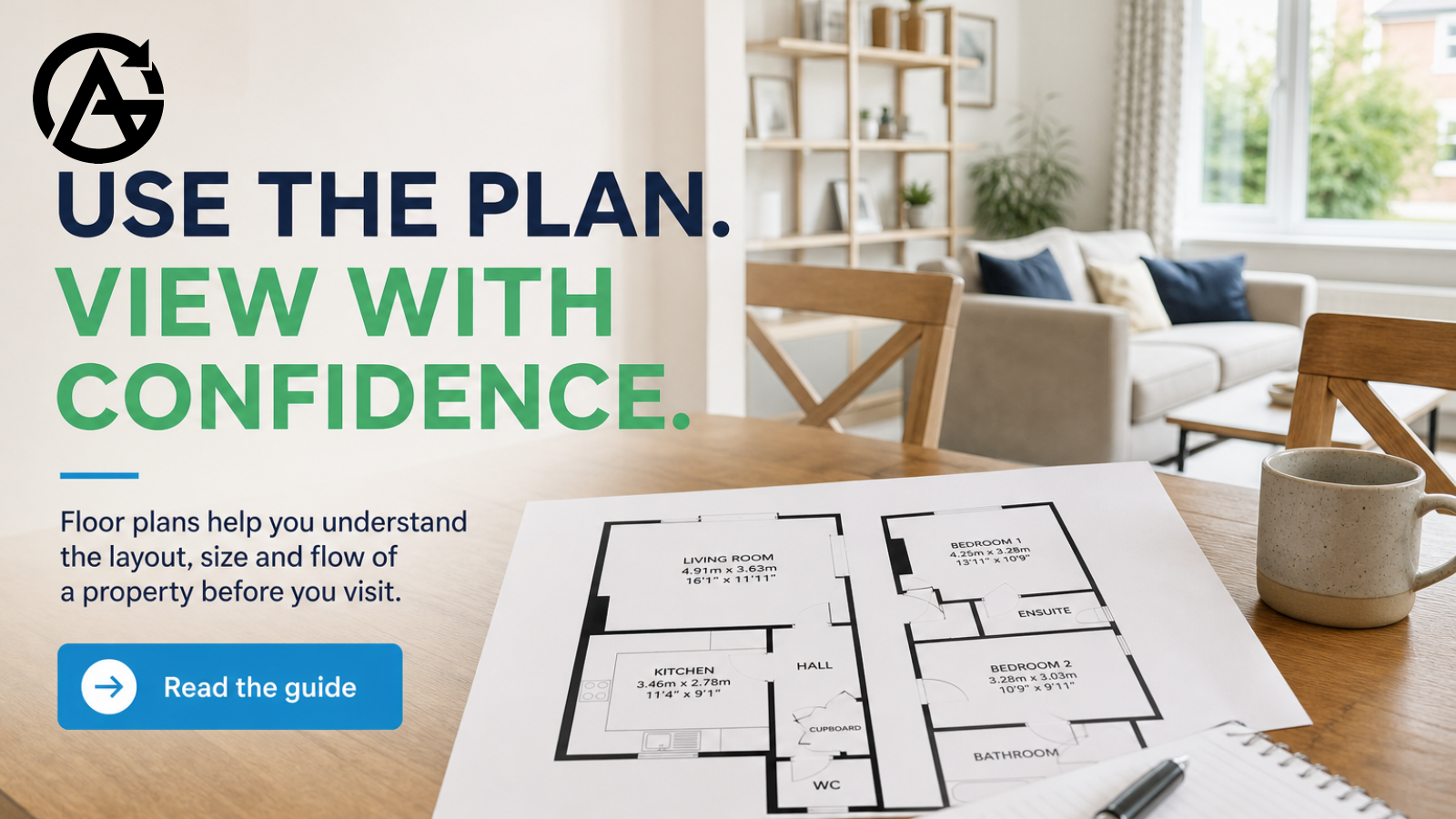
Keep marketing material separate from legal records. A marketing floor plan helps buyers understand the layout, but is not a replacement for the lease plan. For the buyer’s perspective, read How can buyers use a floor plan to decide whether a home is worth viewing?
What to do before your flat goes on the market
You do not need to solve every paperwork issue yourself. Aim for an organised handover and a clear list of gaps.
Final leasehold seller paperwork checklist
- [ ] Create one folder for the lease, ownership records and later deeds.
- [ ] Add charge statements, accounts, insurance information and management correspondence.
- [ ] Include alteration permissions, warranties and applicable building documents.
- [ ] Check the EPC position before marketing.
- [ ] List missing documents and uncertain answers for your conveyancer.
- [ ] Confirm who will request the management pack and from whom.
- [ ] Keep new notices and correspondence with the sale file as they arrive.