
Avoiding Tenancy Deposit Disputes in Windsor: The Landlord’s 2026 Guide
The abolition of Section 21 evictions in May 2026 has transformed the Windsor rental market into a high-stakes, evidence-based arena. If you aren't prioritising precise digital evidence, you're effectively leaving your rental income to chance. Mastering the art of avoiding tenancy deposit disputes Windsor is no longer optional; it's the only way to safeguard your yield against the strict new Renters' Rights Act requirements.
We understand the stress of managing the new Section 8 grounds and the persistent ambiguity of "fair wear and tear" during check-outs. It's exhausting to risk a £30,000 fine for a minor administrative slip. This guide provides a direct roadmap to achieving zero-friction deposit returns by building a legally robust evidence trail from day one. You'll learn how to use professional property inventory reports to eliminate ambiguity and streamline your move-out process. We'll break down the essential steps to protect your investment and ensure total peace of mind in this new regulatory era.
Key Takeaways
- Learn why high-value Windsor rentals demand professional documentation to justify possession under the latest Section 8 grounds.
- Discover the technical requirements for a legally robust Schedule of Condition, a vital tool for avoiding tenancy deposit disputes Windsor.
- Master the 2026 definitions of fair wear and tear to ensure your claims are adjudicator-proof from the start.
- Implement a proactive mid-term inspection strategy to identify maintenance issues before they escalate into costly deposit friction.
- Streamline your compliance by combining professional inventory reports with EPCs and PAT testing for a faster, friction-free turnaround.
The Windsor Rental Market: High Stakes and Deposit Risks
Windsor properties aren't just housing; they're high-performance assets. High rental yields in the Royal Borough attract a specific calibre of tenant, but these returns come with elevated expectations. A "good enough" approach to documentation will fail you here. In a market where monthly rents often exceed the national average, the margin for error is non-existent. If your property features premium finishes, your evidence must match that quality.
Most disagreements stem from the gap between "domestic clean" and "professional standard." Whilst a tenant might feel they've left the place tidy, a Windsor landlord needs it ready for the next executive let. Without a professional property inventory report, you're entering a battle of opinions you'll likely lose. The financial impact of a blocked deposit can stall your 2026 cash flow, especially with the 10-day return window now strictly enforced after both parties agree on deductions. Avoiding tenancy deposit disputes Windsor starts with acknowledging that high-spec homes need high-spec protection.
Why Windsor Landlords Face Unique Challenges
Corporate tenants and international commuters dominate this local market. They expect perfection. Your granite worktops, integrated smart home tech, and designer flooring are high-value items that require specific protection. Windsor also sees a trend toward longer tenancies. Whilst stability is great for income, it increases the "wear and tear" risk. Distinguishing between three years of natural use and genuine damage requires a meticulous baseline. If you can't prove the original state of a bespoke fixture, you can't claim for its repair.
The Cost of a Dispute: Beyond the Deposit
A dispute isn't just about the money held. It's about the time you lose. Every hour spent uploading photos to evidence portals is an hour you aren't marketing the property or vetting new tenants. This process is governed by specific Tenancy Deposit Scheme legislation, which places the burden of proof firmly on the landlord. If your documentation is vague, the adjudicator will almost always side with the tenant.
The emotional toll is equally heavy. Dealing with a departing tenant's frustration is draining. With the May 2026 Renters' Rights Act changes, you now rely on Section 8 for possession. This makes your paper trail your primary shield. If your evidence is weak, you don't just lose the deposit; you risk your ability to manage your property effectively. Avoiding tenancy deposit disputes Windsor isn't just about the cash; it's about maintaining control over your investment. Professionalism is your best insurance policy.
The Check-in Inventory: Your Primary Defence
In the high-value Windsor market, a basic list of furniture is no longer sufficient. You need a comprehensive Schedule of Condition. This document acts as your primary shield when avoiding tenancy deposit disputes Windsor. It captures the precise state of every surface, fixture, and fitting before the tenant moves in. Without this detailed baseline, any future claim for damages is merely your word against theirs. A professional report removes that uncertainty.
High-resolution, time-stamped photography is non-negotiable in 2026. Adjudicators demand visual proof that is both clear and verifiable. If a tenant damages a designer splashback or scratches premium hardwood flooring, a blurry smartphone snap won't suffice. You need professional-grade imagery that leaves no room for doubt. This digital evidence must be coupled with detailed written descriptions to provide a complete picture of the property's move-in state.
What a Professional Windsor Inventory Must Include
A robust report goes far beyond the obvious. It must detail the condition of walls, ceilings, and flooring in every room, noting any existing marks or scuffs. It should also verify appliance functionality and include the Portable Appliance Testing (PAT) status for all provided electronics. Don't forget the "hidden" spots. Photographic evidence of oven interiors, the space behind doors, and even the inside of cupboards prevents common move-out arguments regarding cleanliness and minor damage.
Why do your own photos carry less weight during adjudication? Adjudicators often view landlord-produced evidence as inherently biased. An independent report, however, provides a neutral, third-party assessment that is difficult to challenge. When you protect the deposit in a government-backed tenancy deposit scheme, the legal burden of proof rests entirely on your shoulders. Using a professional inventory service removes the "bias" argument from the tenant's defence and ensures your evidence is viewed as credible.
The Legal Weight of Independent Reports
Independent inventory clerks act as neutral witnesses to the property's condition, providing an objective record that stands up to scrutiny. Their reports are professionally structured to meet the specific requirements of dispute resolution services. To ensure maximum legal weight, the tenant must sign and date the document at the very start of the tenancy. This confirms their total agreement with the reported condition. It's a small but vital administrative step that effectively closes the door on future disputes before they can even begin.
Deciphering Fair Wear and Tear vs. Tenant Damage
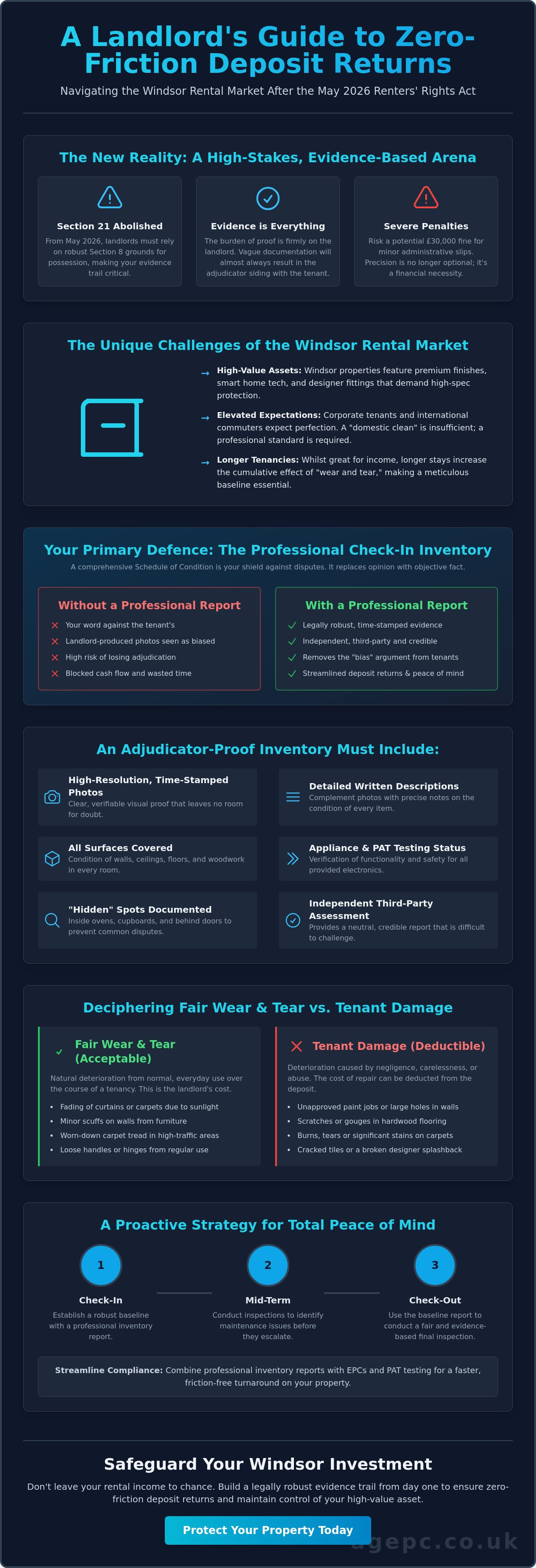
Understanding the distinction between natural deterioration and genuine damage is the cornerstone of avoiding tenancy deposit disputes Windsor. In the 2026 rental market, adjudicators apply a strict "fair wear and tear" test. This accounts for the reasonable use of a property by a tenant over the duration of their stay. It's not about returning the property in identical condition to the start; it's about returning it in a condition consistent with the length of the tenancy. For a deeper dive into these nuances, you can learn more about what is fair wear and tear in a rental property Reading.
Avoid the "Betterment" trap at all costs. You cannot legally use a tenant's deposit to improve your property's value or condition beyond its original state. If a five-year-old carpet is damaged, you aren't entitled to the cost of a brand-new replacement. Adjudicators use the "apportionment" method to calculate deductions. They consider the item's age, quality, and expected lifespan. You only receive a portion of the value based on the remaining "useful life" that was lost. Official fair wear and tear guidance confirms that landlords must expect some degree of deterioration.
The "Life Expectancy" Framework for Windsor Properties
Windsor's high-end finishes demand specific depreciation expectations. A standard rental carpet might last five years. A premium wool blend in a luxury apartment might last eight. Adjudicators weigh original quality against the damage claimed.
- Paintwork: Typically expected to last 3 to 5 years in a high-traffic rental.
- Carpets: Usually 5 to 8 years depending on quality and usage.
- White Goods: Often calculated over a 5 to 10-year period.
Spotting the Difference: Scuffs vs. Holes
Minor scuffs near light switches or skirting boards are generally classified as wear and tear. They're the result of normal daily life. However, deep gouges in hardwood, burns on worktops, or holes from wall-mounted televisions are damage. Malicious intent isn't required for a claim; accidental damage is still the tenant's responsibility. With the post-Renters Reform era allowing more flexibility for pets, you must be particularly vigilant. Documenting pet-related wear versus scratch marks on doors is essential. Clear, high-resolution photos from your professional inventory are the only way to prove the transition from "used" to "damaged." This evidence is your only path to avoiding tenancy deposit disputes Windsor when the move-out inspection reveals surprises.
The Mid-Term Inspection and Check-out Protocol
Mid-term inspections are your first line of defence. They transform your management from reactive to proactive. By identifying issues early, you're effectively avoiding tenancy deposit disputes Windsor before the tenancy even ends. These visits allow you to address unauthorised pets or smoking whilst the tenant is still in situ. You aren't just checking the property; you're building a chronological record of care. This documentation is vital under the Renters' Rights Act 2026, where evidence-based management is the only way to protect your yield.
The 10-day rule is now a critical deadline. Once you and the tenant agree on any deductions, you must return the deposit within 10 days. Delays here can lead to formal scheme intervention. Professional documentation makes this negotiation significantly faster. If you can show a direct comparison between the move-in state and the current condition, tenants are far less likely to challenge a fair deduction. It removes the emotion from the conversation and replaces it with facts.
Conducting Effective Mid-Term Inspections
Don't view these visits as a chore. They're an opportunity to spot lease breaches like sub-letting or unauthorised occupants early. Record your findings in a brief, structured report. If you notice a dripping tap or a minor carpet stain, recommend maintenance or professional cleaning immediately. This creates a paper trail of "advice given" to the tenant. It proves you were a proactive landlord, which makes it much harder for tenants to claim negligence or "fair wear and tear" for avoidable damage later.
The Final Walkthrough and Evidence Gathering
Your original inventory is your master checklist. Walk through the property and capture comparative photos from the exact same angles used during the check-in. This side-by-side evidence is the gold standard for adjudicators. If cleaning is the point of contention, rely on professional invoices and receipts rather than personal opinions. Providing a receipt for a professional clean sets a clear, undeniable benchmark for the expected standard. For total clarity at the end of a tenancy, book a professional property inventory report to ensure your evidence is indisputable and your investment is protected.
Professional Compliance Services for Windsor Landlords
Success in the 2026 rental market requires more than just good intentions. It demands a systematic approach to compliance. AG Property Services organises your Windsor property management from day one; we provide the speed and precision necessary to protect your yield. Why manage multiple contractors when you can access a unified solution? We combine Domestic EPCs, PAT testing, and detailed inventory reports into a single, efficient workflow. This integrated approach is the most effective method for avoiding tenancy deposit disputes Windsor. It ensures your evidence is consistent, professional, and ready for any adjudication.
Our local expertise in the Slough and Windsor area matters. We understand the high expectations of the Royal Borough’s corporate and international tenants. A generic report won't suffice for a high-spec Windsor apartment. We provide the granular detail required to justify deductions for premium finishes. By using our professional photography and 3D floor plans, you aren't just marketing the property; you're creating a high-resolution digital twin of your asset. This serves as an undeniable baseline for future comparisons.
The AG Property Services Checklist
We've designed our service list to cover your primary legal and financial risks. Our process includes:
- Domestic EPCs: Ensuring your property meets energy standards for a legal right-to-rent status.
- Independent Inventory Reports: Creating evidence specifically structured to stand up to TDS or DPS scrutiny.
- PAT Testing: Proving electrical safety at move-in to mitigate your liability.
It’s a comprehensive shield for your investment that removes the stress of complex administrative tasks.
Streamlining the Changeover Process
Void periods are the enemy of rental yield. We prioritise speed without compromising on accuracy. Our rapid turnaround for inventory reports means you can move new tenants in immediately after the previous ones depart. We also offer professional property photography and 2D or 3D floor plans to help you attract high-calibre tenants before the property even hits the market. Don't leave your compliance to chance. Secure your Windsor property today with professional inventory reports and experience a friction-free management process.
Secure Your Windsor Yield for 2026 and Beyond
Success in the Royal Borough's high-stakes market requires more than just property maintenance. It demands an evidence-based approach to every tenancy. By implementing professional check-in reports and proactive mid-term inspections, you're effectively avoiding tenancy deposit disputes Windsor before they start. The 2026 regulatory landscape is strict; however, it rewards landlords who prioritise transparency and meticulous record-keeping. You don't have to manage this complex administrative burden alone.
Our team has been serving Windsor and the Royal Borough since 2012. We act as independent inventory specialists and accredited EPC assessors to ensure your portfolio remains fully compliant and friction-free. Rapid turnaround times and high-resolution digital evidence provide the peace of mind you need to focus on growing your investment. It's time to replace uncertainty with professional verification. Protect your Windsor investment with a professional inventory report today. Your future yield depends on the quality of your documentation right now.
Frequently Asked Questions
How long does a landlord have to return a deposit in Windsor?
You must return the tenancy deposit within 10 days of both parties agreeing on any deductions. This timeline is a verified legal requirement under the current framework. If there is a disagreement, you should return the undisputed amount immediately whilst the remainder is handled by a dispute resolution service. Prompt action helps maintain a professional relationship and ensures you remain compliant with government-approved scheme rules.
Can a landlord deduct for professional cleaning if the tenant did it themselves?
No, you cannot automatically deduct for professional cleaning if the tenant has already cleaned the property to the required standard. The property must be returned in the same state of cleanliness as recorded in the initial inventory. If the tenant's cleaning matches the move-in condition, any claim for a professional clean will be rejected by an adjudicator. You only have a valid claim if you can prove the hygiene standard has clearly dropped.
What happens if I did not provide an inventory at the start of the tenancy?
You will struggle to justify any deductions without a move-in inventory because the burden of proof rests entirely on the landlord. Adjudicators generally assume the property was in good condition at the start unless you have time-stamped evidence to prove otherwise. This is a significant hurdle when avoiding tenancy deposit disputes Windsor, as you lack the necessary baseline to demonstrate that damage or cleanliness issues occurred during the tenancy.
Is an inventory report legally required for a Windsor rental?
An inventory report isn't a statutory requirement, but it is a practical necessity for legal and financial protection. Without one, you cannot successfully claim against a deposit or provide the evidence required for certain Section 8 possession grounds under the 2026 regulations. In the high-value Windsor market, skipping this step leaves your investment vulnerable. Most protection schemes will side with the tenant by default if no professional report exists.
How do I win a tenancy deposit dispute as a landlord?
You win by providing objective, professional evidence that proves a breach of the tenancy agreement. This requires a professional check-in report, a matching check-out report, and dated invoices for any necessary repairs or cleaning. Adjudicators look for a clear "paper trail" that demonstrates the property's condition has deteriorated beyond fair wear and tear. Consistency and high-resolution photography are your most effective tools during these formal proceedings.
Can I charge my tenant for the cost of an inventory clerk?
No, you cannot charge a tenant for the cost of an inventory clerk or for the production of any inventory reports. The Tenant Fees Act 2019 prohibits landlords from passing these administrative costs onto tenants. This applies to both the start and the end of the tenancy. You must factor these professional fees into your own management budget as a necessary cost of protecting your Windsor property investment.
What is the difference between a Schedule of Condition and an Inventory?
An inventory is a list of items within the property, whilst a Schedule of Condition describes their exact state and appearance. Most modern reports combine both into a single comprehensive document for maximum clarity. For example, the inventory lists a "kitchen worktop," but the Schedule of Condition specifies it is "granite, clean, and free from chips." Having both is vital for avoiding tenancy deposit disputes Windsor effectively.
How does the TDS decide who wins a deposit dispute?
The Tenancy Deposit Scheme (TDS) uses neutral adjudicators to review the evidence provided by both the landlord and the tenant. They operate on a "balance of probabilities" and look for proof of financial loss. They compare the move-in evidence against the move-out findings whilst strictly accounting for fair wear and tear. If your documentation is vague, incomplete, or missing entirely, the adjudicator will almost always rule in favour of the tenant.
Important Information
The information provided in this article is for general guidance and informational purposes only and does not constitute legal, financial, or professional property advice. While AG Site Solutions aims to keep all content accurate and up to date, property regulations, landlord obligations, EPC requirements, and housing legislation may change over time. Readers should always seek professional advice or consult the relevant authorities before making decisions relating to property compliance, tenancy matters, Energy Performance Certificates (EPCs), landlord responsibilities, or legal obligations. Some articles may be created or assisted using AI-supported content tools and are reviewed and enhanced using real industry experience and property compliance knowledge. For professional assistance, quotations, or compliance support, please contact AG Site Solutions directly via agepc.co.uk