

Minimum EPC Rating for Rental Property: The 2026 Landlord Guide
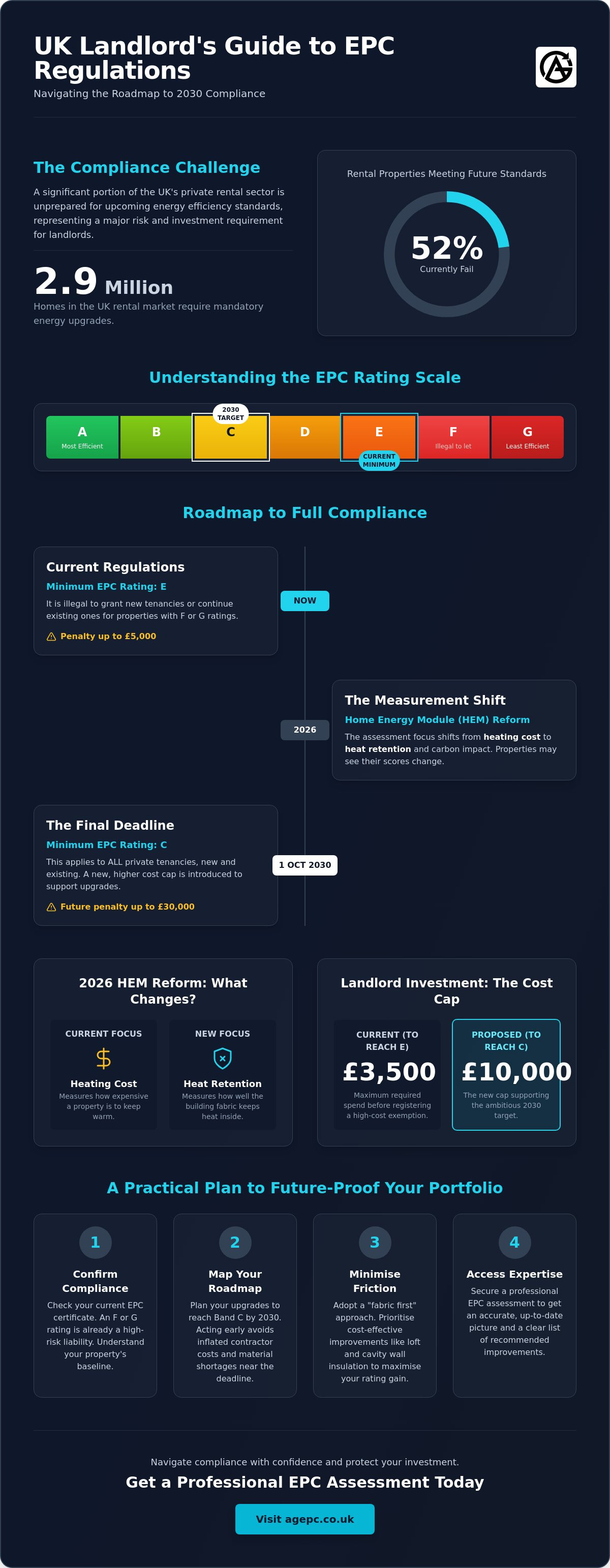
Did you know that 52% of UK rental properties currently fail to meet the government's upcoming energy standards? That is 2.9 million homes facing a mandatory upgrade. Right now, the minimum EPC rating for rental property remains at Band E, but the regulatory environment is shifting rapidly. If you're feeling overwhelmed by changing deadlines and the threat of a £30,000 fine for non-compliance, you aren't alone. It's a significant administrative burden that requires clear, expert guidance to manage.
We understand the frustration of moving goalposts and the high cost of energy upgrades. It's difficult to plan your portfolio when regulations feel like a moving target. This guide removes the friction. You'll learn exactly how the 2026 Home Energy Module (HEM) reforms change your assessments and how to reach the October 2030 Band C deadline efficiently. We'll break down the new £10,000 cost cap, the shortened five-year certificate validity, and the practical steps to protect your investment whilst keeping your properties legal and your tenants warm.
Key Takeaways
- Confirm your current compliance. The legal minimum EPC rating for rental property is currently Band E, making F or G ratings a high-risk liability.
- Map your roadmap to 2030. All private rentals must hit Band C by October 2030, supported by a revised cost cap of £10,000 per property.
- Anticipate the 2026 reforms. The new Home Energy Module (HEM) shifts the focus to heat retention, requiring a smarter approach to building fabric.
- Minimise upgrade friction. Learn why "fabric first" improvements are the most cost-effective way to future-proof your portfolio against rising standards.
- Access local expertise. Secure professional EPC services across the Thames Valley to navigate specific regional housing stock and compliance nuances.
Current Minimum EPC Rating for Rental Property: The Legal Baseline
Understanding the current legal baseline is the first step toward a compliant portfolio. As of 2026, the minimum EPC rating for rental property in England and Wales remains Band E. This standard is enforced through the Minimum Energy Efficiency Standards (MEES). It's currently illegal to grant a new tenancy or continue an existing one if the property holds an F or G rating. You must secure a valid Energy Performance Certificate (EPC) before you start marketing or allowing viewings. It's a simple requirement that prevents significant legal friction.
Local authorities take non-compliance seriously. If you fail to meet the minimum EPC rating for rental property, you risk financial penalties of up to £5,000 per property. These fines aren't just theoretical; they're active tools used to ensure housing quality. Professional verification ensures you stay on the right side of the law whilst providing a safe, efficient home for your tenants.
Properties Covered by MEES Regulations
MEES regulations cast a wide net across the private rented sector. They apply to assured tenancies, regulated tenancies, and domestic agricultural tenancies. If your property was marketed for sale or let at any point in the last 10 years, an EPC is mandatory. For landlords operating in areas like Reading and Slough, the "relevant person" responsible for compliance is the legal landlord. Whether you manage a single flat or a large portfolio, the responsibility to maintain a Band E rating is absolute.
Valid Exemptions for Landlords
Some properties face unique structural or financial hurdles. In these cases, you can register an exemption on the PRS Exemptions Register to remain compliant. Common exemptions include:
- High Cost Exemption: This applies if the cost of the cheapest recommended upgrades exceeds the current £3,500 cap.
- Wall Insulation Exemption: Used when specific insulation measures would damage the property's fabric or structure.
- All Improvements Made: This status is for properties where all possible energy efficiency measures have been installed, yet the rating remains below E.
Registering an exemption is a proactive way to protect yourself from enforcement. It provides a transparent, legal paper trail that proves you've done everything reasonably possible to improve your property's performance.
The 2026 EPC Reform and the Roadmap to 2030
The 2026 EPC reform represents a fundamental shift in how the UK measures domestic energy. Currently, the minimum EPC rating for rental property focuses heavily on the cost of heating. From 2026, the new Home Energy Module (HEM) will prioritise heat retention and carbon impact. This change supports the government's "Warm Homes" plan, ensuring properties aren't just cheap to run but are physically efficient at keeping heat inside. Referencing the official Minimum Energy Efficiency Standard landlord guidance is helpful for understanding the current framework, but the 2026 shift adds a layer of complexity for those aiming for Band C.
What the 2026 Measurement Shift Means for You
This overhaul moves away from simple energy consumption metrics. It targets thermal efficiency. For owners of traditional Victorian terraces in Windsor, this presents a specific challenge. These solid-wall properties often struggle with heat loss, meaning a property rated E today might see its score drop under the new 2026 metrics. Preparing now is vital. Multi-property owners should consult our Ultimate UK Property Compliance Roadmap 2026 to align their portfolios with these measurement changes before the rules tighten.
The 2030 Deadline: A Strategic Approach
October 1, 2030, is the definitive deadline for all private tenancies to reach Band C. This isn't just for new lets; it applies to every active rental agreement. In competitive markets like Maidenhead and Slough, waiting until 2029 to upgrade will likely lead to inflated contractor costs and limited availability. Early action is a smarter financial move. Adopting a clear 2030 roadmap is essential for maintaining your long term rental yield and avoiding the risk of a vacant, unlettable asset. If you need a fresh assessment to see where you stand, order a professional EPC to start your compliance journey.
Practical Improvements: Moving from Band E to Band C Efficiently
Reaching the minimum EPC rating for rental property standards requires a strategic, "fabric first" approach. This philosophy prioritises the building's shell to ensure maximum heat retention before investing in expensive technology. With the government estimating average upgrade costs between £6,100 and £6,800, efficiency is paramount. You can find a detailed breakdown of how these improvements affect your property's market worth in The Definitive Guide to Domestic EPCs. Following the official government guidance on MEES ensures your investments align with legal requirements whilst protecting your rental yield.
Fabric-First Upgrades for Heat Retention
The 2026 HEM reforms reward properties that keep heat inside. Start with these high-impact structural measures:
- Loft Insulation: Ensure a thickness of at least 270mm. It is one of the most cost-effective ways to stop heat escaping through the roof.
- Cavity Wall Insulation: A major driver for EPC points. It fills the gap between brickwork to create a thermal barrier.
- High-Performance Glazing: Upgrading to modern double or triple glazing significantly improves the thermal metrics used in the 2026 system.
- Draft Proofing: Seal gaps around doors, windows, and floorboards. It is an inexpensive way to improve tenant comfort and thermal scores.
Heating and Lighting Optimisation
Once the fabric is secure, focus on how heat is generated and controlled. Replacing an old G-rated boiler with a modern condensing model or a heat pump can bridge the gap between Band D and Band C. Pair these with smart heating controls and thermostatic radiator valves (TRVs) to give tenants better control over their energy use. Finally, switch 100% of light fittings to LED. This is a simple, high-impact boost to your EPC score with minimal capital outlay.
Don't guess which upgrades will work for your specific property. To get a clear, actionable list of recommendations tailored to your portfolio, book your domestic EPC assessment today and start your journey to Band C compliance.
Local Compliance and Professional EPC Services in the Thames Valley
Landlords across the Thames Valley navigate a complex rental landscape. From historic Beaconsfield manors to modern Harrow apartments, the age and style of your property dictate your compliance strategy. Meeting the minimum EPC rating for rental property is not a one-size-fits-all task. Local expertise is essential for identifying the most efficient path to Band C. AG Property Services provides rapid, accredited assessments to keep your portfolio legal and your administrative stress low.
Why Use a Local Thames Valley Assessor?
Choosing a local assessor offers distinct advantages. We provide faster turnaround times for properties in Maidenhead, St Albans, and High Wycombe. Our team understands local council enforcement trends regarding MEES and specific selective licensing schemes. We offer personalised advice on which improvements work best for specific local building styles. This ensures your budget is spent on high-impact measures rather than generic upgrades that might not suit a Thames Valley property's unique construction.
Booking Your 2026 Compliance Audit
We simplify the administrative burden through a tech-enabled, logical process. It starts with a broad value proposition: total compliance in one visit. Our process is streamlined: book online, host the professional site visit, and receive your digital certificate rapidly. To maximise efficiency, we can combine your EPC with PAT testing for landlords in Reading. This approach organises multiple compliance documents like EPCs, PAT reports, and Inventories in a single visit. It saves time. It reduces tenant disruption. Most importantly, it ensures you hit the minimum EPC rating for rental property before the 2030 deadlines loom.
Secure your property's future today. Book your Domestic EPC with AG Property Services today and gain peace of mind in a changing regulatory market.
Secure Your Rental Portfolio's Future
Compliance is moving faster than ever. Whilst the current minimum EPC rating for rental property remains Band E, the roadmap to the 2030 Band C deadline is already active. The 2026 measurement reforms mean you must prioritise heat retention and thermal efficiency today. Waiting until the last minute risks higher contractor costs, limited availability, and unlettable assets. Proactive assessment is the smartest way to protect your long-term yield and property value.
AG Property Services makes this transition seamless and stress-free. We've served landlords across Slough, Reading, and the wider Thames Valley since 2012. As accredited domestic and commercial assessors, we provide a rapid, one-stop shop for EPCs, PAT testing, and professional floor plans. We remove the friction from complex property management tasks, allowing you to focus on your portfolio growth.
Get a fast, professional EPC quote for your rental property today. Take control of your compliance and keep your rental investments profitable for years to come.
Frequently Asked Questions
Can I rent out a property with an EPC rating of D in 2026?
Yes, you can legally rent out a property with a Band D rating in 2026. The current minimum EPC rating for rental property remains at Band E for all existing and new tenancies. Whilst a D rating is compliant today, it's wise to view it as a transitional grade. Preparing for the mandatory shift to Band C by 2030 now will help you avoid a last minute rush and potential price hikes for energy saving materials.
How much does it cost to improve an EPC rating from E to C?
Costs vary based on your property's age, but the government estimates the average spend to reach Band C is between £6,100 and £6,800. Other industry reports suggest a broader range of £3,100 to £15,000 depending on the building's fabric. Under the new 2030 regulations, a cost cap of £10,000 will be introduced. This ensures you aren't legally forced to spend beyond a set limit to achieve the required energy standards.
What happens if my rental property does not reach Band C by 2030?
Failing to reach Band C by the October 1, 2030, deadline will make it illegal to continue letting your property. This results in an immediate loss of rental income and significant legal risk. Local authorities can issue fines of up to £30,000 per property for non-compliance. Acting early protects your investment from these penalties and ensures your asset remains attractive to energy conscious tenants in a competitive market.
Are listed buildings exempt from the minimum EPC rating requirements?
Listed buildings aren't automatically exempt from the minimum EPC rating for rental property regulations. An exemption only applies if the specific energy improvements required would unacceptably alter the building's character or appearance. You'll still need a professional assessment to identify which works are feasible. If the property cannot reach the required grade due to its listed status, you must register a formal exemption on the PRS Exemptions Register.
How long does an EPC assessment take for a standard rental property?
A professional on-site EPC assessment typically takes between 30 and 60 minutes for a standard domestic property. The assessor requires access to all rooms, the boiler, and the loft to record essential data on insulation and heating. Following the visit, the data is processed through the government's approved software. Your digital certificate is usually generated and delivered within 24 hours, providing a rapid and efficient compliance solution.
Important Information
The information provided in this article is for general guidance and informational purposes only and does not constitute legal, financial, or professional property advice. While AG Site Solutions aims to keep all content accurate and up to date, property regulations, landlord obligations, EPC requirements, and housing legislation may change over time.
Readers should always seek professional advice or consult the relevant authorities before making decisions relating to property compliance, tenancy matters, Energy Performance Certificates (EPCs), landlord responsibilities, or legal obligations.
Some articles may be created or assisted using AI-supported content tools and are reviewed and enhanced using real industry experience and property compliance knowledge.
For professional assistance, quotations, or compliance support, please contact AG Site Solutions directly via agepc.co.uk