
What Is a Good EPC Rating in the UK? The 2026 Homeowner’s Guide
Did you know that the average home in the country currently sits at a Band D? While that might have been acceptable recently, the landscape has shifted rapidly with the 2026 rollout of the Home Energy Model. If you're wondering what is a good EPC rating UK property owners should target today, the answer depends entirely on your specific goals.
It's natural to feel anxious about shifting government targets or the cost of energy improvements. You need clear answers and a logical path forward to protect your investment. This guide provides exactly that. Discover what a "good" score looks like for your property and learn how to achieve it without wasting time or money.
We'll explore the latest compliance standards, including the move toward a minimum Band C for rental properties by 2028. You'll also find a prioritised list of cost-effective upgrades to boost your rating. Gain the confidence to manage your property's energy performance with speed and precision.
Key Takeaways
- Decode the A-G energy scale to understand where your property sits compared to the national average.
- Clarify what is a good EPC rating UK property owners need for 2026 compliance, specifically the new Band C target for landlords.
- Unlock the financial benefits of higher ratings, including increased property value and faster sales in competitive local markets.
- Access a prioritised list of improvements, ranging from rapid LED lighting swaps to high-impact loft insulation.
- Learn how to streamline your property marketing by booking professional EPC assessments alongside 2D and 3D floor plans.
Understanding the EPC Rating Scale: What Do the Grades Mean?
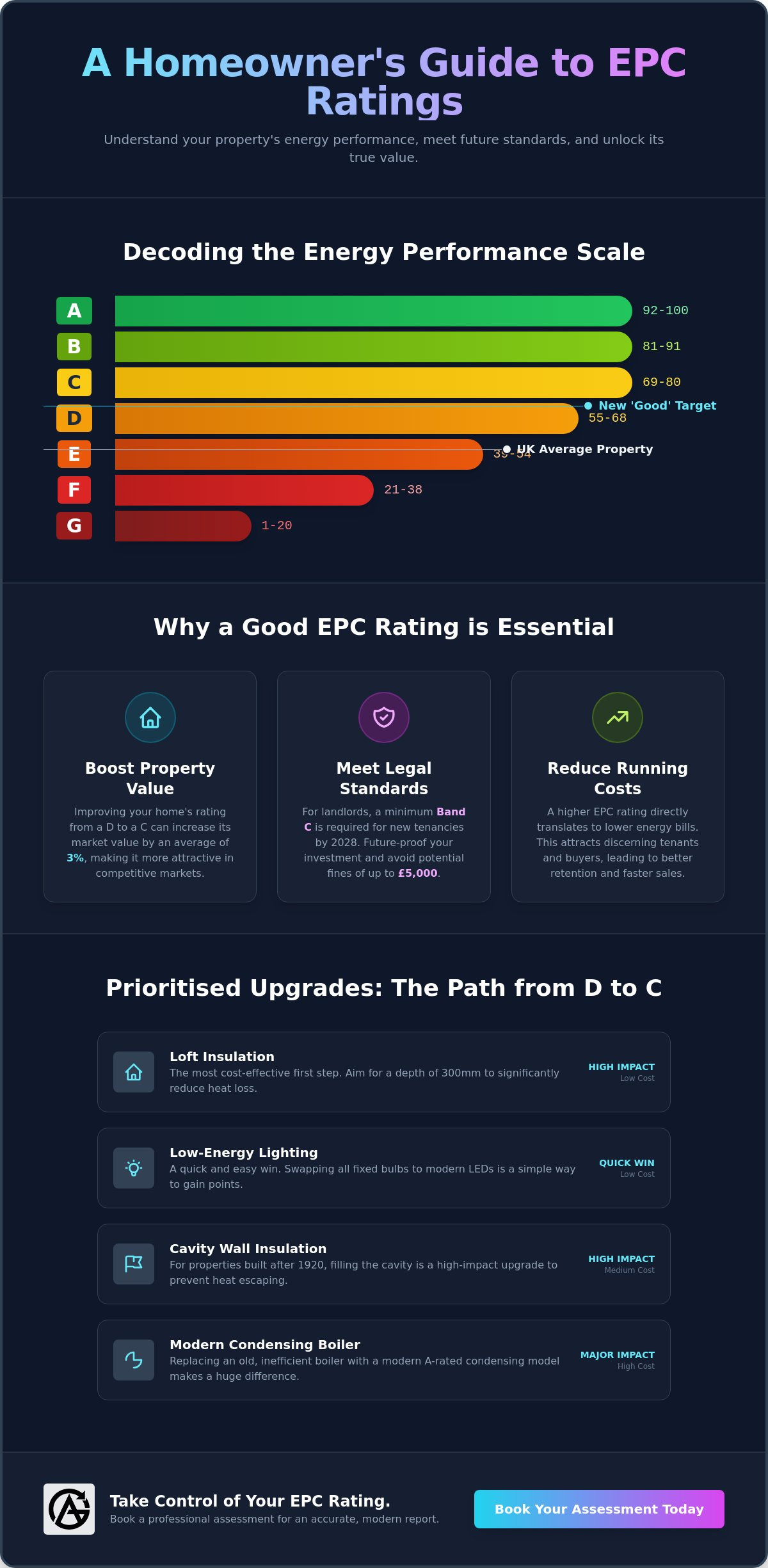
An Energy Performance Certificate (EPC) measures the energy efficiency of a property based on its construction, heating, and lighting, providing a roadmap for reducing carbon footprints and fuel bills. The system uses a points-based scale from 1 to 100. These points are grouped into bands from A to G. An 'A' rating represents the highest efficiency, typically found in modern new-builds. A 'G' rating indicates a property with poor insulation and high running costs.
If you're wondering what is a good EPC rating UK homeowners should target, the national average is currently a Band D. Whilst this is common for older British housing stock, it's no longer the ideal benchmark. Moving your property from a D to a C can increase its market value by an average of 3%. Higher ratings signal lower utility bills to prospective buyers, making your home more attractive in competitive markets like Reading or Slough.
During a physical inspection, an assessor examines key efficiency markers. We check loft insulation depth, wall construction, and boiler efficiency. We also record the presence of double glazing and low-energy lighting. These details are fed into a standardised calculation to produce your final score.
How EPC Scores are Calculated
Assessors use the Standard Assessment Procedure (SAP) to ensure consistency across the country. This methodology removes occupant behaviour from the equation. It focuses purely on the building's fabric and fixed services. Two identical houses can have different scores based on internal upgrades. For example, one might have 300mm of loft insulation whilst the other has none. These small changes significantly shift your position on the 100-point scale.
The Difference Between Efficiency and Cost
The primary EPC rating is actually a measure of energy costs rather than just carbon output. It calculates how much it costs to heat and light the property per square metre. This is why fuel prices play a role in the calculation. You might see a separate 'Environmental Impact' rating on your certificate. This specific score focuses on CO2 emissions, whereas the main A-G band prioritises your bank balance and overall cost-efficiency.
What Counts as a 'Good' EPC Rating in 2026?
While the average property in the UK currently sits at a Band D, the market definition of "good" has shifted. In 2026, what is a good EPC rating UK homeowners should target is increasingly a Band C or higher. This isn't just a matter of preference. It's a strategic necessity for legal compliance and financial protection.
Local housing stock often dictates what is realistic. A Victorian conversion in Windsor faces different structural challenges than a new-build apartment in Slough. For an older property, a high Band C is considered excellent. For a modern build, anything less than a B might be seen as a drawback. In competitive markets like Maidenhead, a high rating acts as a powerful marketing tool. It gives buyers peace of mind that they won't face "hidden" retrofitting costs immediately after moving in.
The 2026 Legal Requirements for Landlords
Compliance is the primary driver for the rental sector. Currently, all privately rented homes must meet a minimum Band E standard. However, the roadmap to 2028 is clear. The government has confirmed that all new tenancies must achieve a Band C rating. This requirement extends to all existing tenancies by October 2030. Failing to meet these standards carries a fine of £5,000. Future-proofing your portfolio now is the only way to avoid a last-minute scramble and potential loss of rental income.
EPC Ratings and Property Value
Energy efficiency now carries a "Green Premium" in the sales market. Data indicates that improving a home from a D to a C can increase its value by an average of 3%. In the Reading rental market, tenants are becoming more selective. They prioritise properties with lower utility bills to manage their own cost of living. High-efficiency homes enjoy better tenant retention and fewer void periods. To see how your property measures up against these new standards, you can book a professional domestic EPC to get an accurate, modern assessment of your building's performance.
How to Improve Your EPC Rating: From D to C and Beyond
Moving from a Band D to a C requires a strategic approach. If you're still asking what is a good EPC rating UK landlords should aim for, the answer is a solid C to ensure future compliance. Achieving this doesn't always require a massive budget. Start with a "fabric first" approach. This means prioritising insulation before investing in expensive technology. Loft insulation is a prime example. Increasing depth to 270mm can jump your score significantly. For older properties in Windsor or Maidenhead, cavity wall treatments or draught-proofing around period doors stop heat escaping effectively.
According to official government guidance on EPCs, every certificate includes a list of recommended measures. We suggest tackling the high-impact, low-effort tasks first. These changes improve your score and reduce fuel bills immediately.
Low-Cost Improvements with High Impact
Some upgrades cost less than £500 but offer immediate point gains. Switching every bulb to 100% LED is the fastest way to boost your score. It's a simple swap that assessors look for during every inspection. Insulating your hot water cylinder with a 75mm jacket is another quick win. Don't overlook draught-proofing. Sealing gaps around letterboxes and floorboards prevents the "chimney effect" in older homes. These small steps build the foundation for a better rating.
Advanced Upgrades: Solar Panels and Heat Pumps
Larger investments like solar PV or heat pumps offer the biggest long-term savings. However, their impact on your rating depends on how well they integrate with your home's existing systems. Solar panels are excellent, but their benefit is maximised when you use the energy on-site. Professional Domestic EPC assessments are vital here. They help identify which advanced upgrades will actually move the needle for your specific building. Ready to start your journey to a Band C? Book your EPC assessment today to get a tailored list of improvements.
Booking Your Professional EPC Assessment in the South East
Speed and transparency are essential when managing property compliance. At AG Property Services, we provide a streamlined route to certification. If you're still questioning what is a good EPC rating UK buyers expect, our expert assessors provide the clarity you need. We serve Slough, Reading, and the wider South East with rapid same-day or next-day reporting. This ensures your property listing moves from draft to live without delay.
Preparing for the visit is simple. Ensure the assessor has clear access to the loft, boiler, and any hot water cylinders. If you've recently installed new double glazing or insulation, keep the paperwork handy. This evidence allows for a more accurate rating, particularly in older Berkshire homes where upgrades aren't always visible. Our approach focuses on accuracy and speed, removing the stress of administrative bottlenecks.
Streamlining Your Property Compliance
Efficiency means grouping tasks together. We offer a one-stop solution by combining EPCs with PAT testing. This ensures your electrical safety and energy certification are handled in a single visit. Our deep understanding of local property types across Berkshire and Buckinghamshire ensures your rating is both accurate and legitimate. We remove the friction of multiple appointments, giving you total peace of mind.
Beyond the Certificate: Marketing Your Efficient Home
A high EPC score is a selling point that deserves visibility. Use professional real estate photos to highlight features like modern glazing or solar panels. High-quality imagery captures the attention of energy-conscious buyers immediately. Combine this with a clear 2D or 3D floor plan. These tools help prospective tenants visualise the layout of a well-insulated home. This comprehensive approach maximises your marketing impact. It proves what is a good EPC rating UK properties look like in practice, attracting higher-quality leads faster.
Future-Proof Your Property Strategy Today
Understanding what is a good EPC rating UK homeowners should target provides the foundation for a smarter property strategy. Whether you're a landlord aiming for the 2028 Band C requirement or a seller looking to maximise market value, efficiency is now your most valuable asset. Focus on the high-impact upgrades we've discussed, starting with fabric-first insulation and moving toward modern heating solutions. These steps protect your investment whilst reducing long-term running costs for occupants.
Our team of accredited local assessors is ready to help you navigate these changes with speed and precision. We provide a fast 24-hour turnaround across the South East, alongside comprehensive marketing packages that combine EPCs with professional photography and floor plans. This integrated approach removes the friction from property management and ensures your home stands out in a competitive market. Our experts understand the specific nuances of Berkshire and Buckinghamshire housing stock, ensuring your rating is both accurate and legitimate.
Book your professional EPC assessment today with AG Property Services to secure your property's future. You'll receive a clear, actionable roadmap that turns energy compliance into a genuine competitive advantage. Take control of your property's performance and enjoy total peace of mind.
Frequently Asked Questions
Is an EPC rating of D bad for a UK house?
A Band D rating isn't "bad" because it is the current national average for housing stock. However, it is no longer the benchmark for what is a good EPC rating UK landlords or buyers expect in 2026. Whilst it meets current legal minimums, it signals that the property could be significantly more efficient. Upgrading to a Band C can improve your property value by an average of 3% and reduce annual running costs.
Can I rent out my house with an EPC rating of E in 2026?
Yes, you can legally let a property with an EPC rating of E in 2026. This remains the current minimum energy efficiency standard for England and Wales. However, you must prepare for upcoming regulatory shifts. The government has confirmed that all new tenancies must reach a Band C by 2028. Existing tenancies have until October 2030 to comply. Acting now prevents a last-minute rush and potential fines.
How much does it cost to improve an EPC rating from D to C?
The cost varies based on your property's age and construction. Landlords currently face a statutory spending cap of £3,500 to reach the minimum Band E standard. For the upcoming shift to Band C, the government has confirmed this cap will rise to £10,000. Many properties reach a C through affordable "fabric first" measures. Prioritising loft insulation and draught-proofing often yields the highest point gains for the lowest initial outlay.
How long does an EPC certificate last for a rental property?
An Energy Performance Certificate is valid for 10 years from the date of issue. You don't need to renew it every time a tenant moves in or out unless the previous certificate has already expired. However, if you've made significant energy improvements, getting a new assessment is wise. It ensures your marketing accurately reflects the property's modern efficiency levels and attracts energy-conscious tenants who prioritise lower utility bills.
What is the most common EPC rating in the UK?
Band D is the most frequent rating across the country's housing stock. Government data confirms that the median home in England and Wales sits at this level. This average is primarily due to the large number of older, solid-wall properties that require retrofitting. As the 2026 Home Energy Model rolls out, the national average is expected to climb toward Band C as more owners modernise their heating and insulation.
Will solar panels automatically give me an A rating?
Solar PV systems provide a significant points boost, but they rarely secure an A rating on their own. To reach the top bands, you must combine renewables with exceptional insulation and high-efficiency heating. An A rating requires a building to be nearly carbon-neutral. Solar panels work most effectively when they are part of a broader strategy that includes double or triple glazing and modern heat pump technology.
Important Information
The information provided in this article is for general guidance and informational purposes only and does not constitute legal, financial, or professional property advice. While AG Site Solutions aims to keep all content accurate and up to date, property regulations, landlord obligations, EPC requirements, and housing legislation may change over time.
Readers should always seek professional advice or consult the relevant authorities before making decisions relating to property compliance, tenancy matters, Energy Performance Certificates (EPCs), landlord responsibilities, or legal obligations.
Some articles may be created or assisted using AI-supported content tools and are reviewed and enhanced using real industry experience and property compliance knowledge.
For professional assistance, quotations, or compliance support, please contact AG Site Solutions directly via agepc.co.uk