Homeowner Checklist for EPC Assessment: Prepare for a Better Rating in 2026
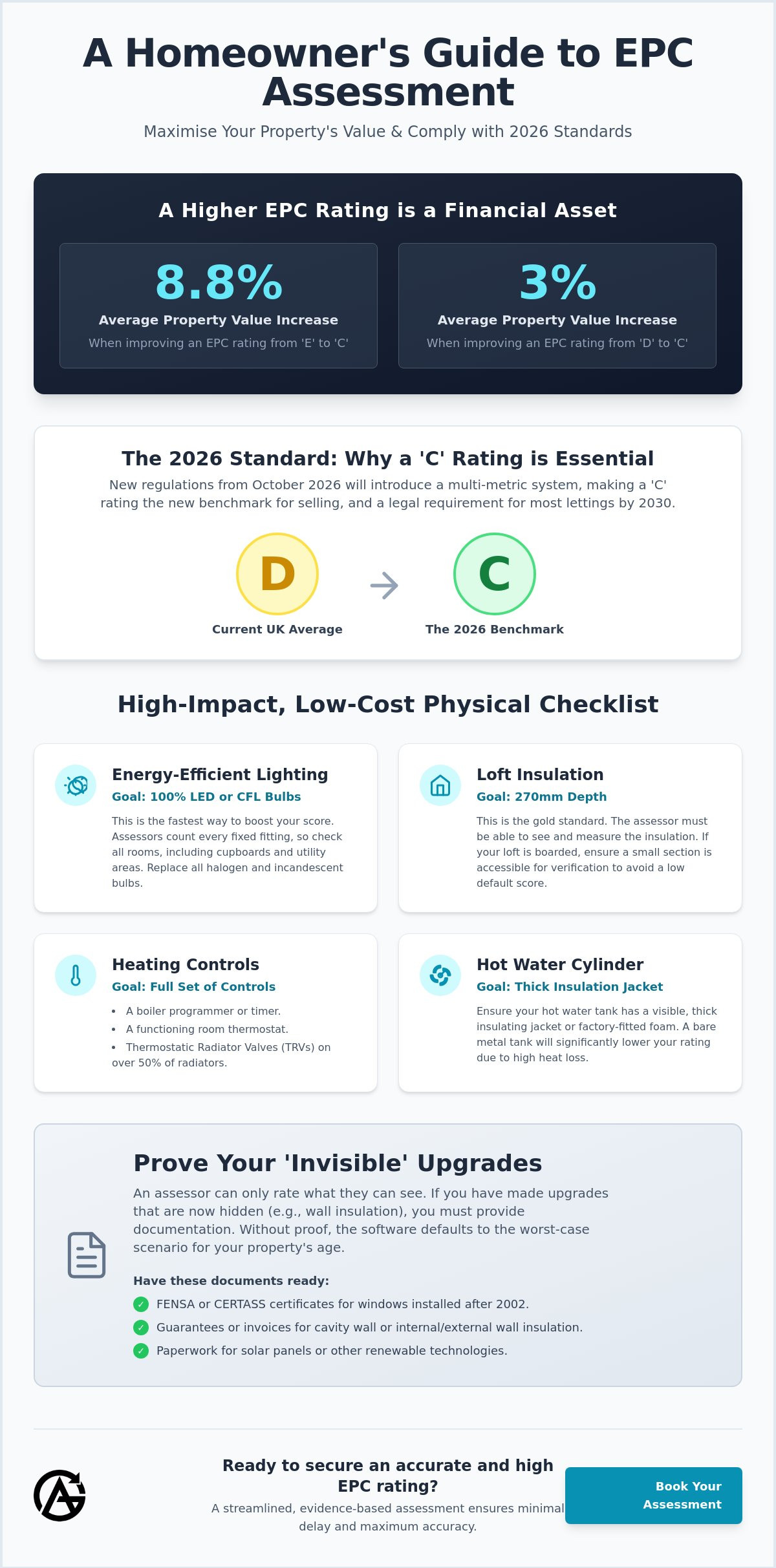
Did you know that moving your property's energy rating from an 'E' to a 'C' can increase its value by an average of 8.8%? With the UK government transitioning to a multi-metric assessment system in October 2026, many homeowners feel anxious about how these stricter standards will affect their property's marketability. It is natural to worry about "failing" an inspection or facing the prospect of expensive upgrades. That is why a robust homeowner checklist for EPC assessment is essential to ensure you aren't left behind by changing regulations.
We believe the assessment process should be fast, transparent, and stress-free. You deserve a rating that accurately reflects your home's efficiency without the guesswork. This guide provides an evidence-based roadmap to help you secure the highest possible score through smart, low-cost preparation. We will preview the critical documentation assessors require, explain the new "fabric-first" methodology, and show you how to remain compliant with the 2026 standards whilst maximising your property's long-term value.
Key Takeaways
- Understand why a 'C' rating is the essential benchmark for 2026 compliance and legal letting.
- Follow our homeowner checklist for EPC assessment to identify high-impact, low-cost physical changes like LED lighting and loft insulation.
- Secure your rating by gathering vital documentation, such as FENSA certificates, to prove energy-saving upgrades that are hidden from view.
- Maximise efficiency by combining your assessment with professional photography and floor plans for a faster, more professional market listing.
- Reduce stress with a streamlined, evidence-based approach designed to deliver your certificate with minimal delay and maximum accuracy.
Understanding the EPC Assessment Process in 2026
An Energy Performance Certificate (EPC) is a legal necessity for any homeowner looking to sell or let their property in the UK. What is an Energy Performance Certificate? It is a standardised document that rates a building’s energy efficiency on an A to G scale. 'A' represents the most efficient homes, whilst 'G' indicates the least. Currently, the UK average is a 'D'. However, 2026 marks a significant shift in how these ratings are calculated and why they matter. New regulations require all privately rented properties to achieve a 'C' rating by 2030, with a multi-metric assessment system arriving in October 2026 to prioritise fabric performance and heating efficiency.
In competitive markets like Reading or Slough, a high rating is more than just a compliance tick. It is a financial asset. Research shows that moving from a 'D' to a 'C' rating can add 3% to your home's value. In high-value areas like Windsor or Beaconsfield, this difference can represent thousands of pounds in equity. The assessment itself is a non-invasive visual inspection. The assessor will not lift floorboards or drill into walls. They rely entirely on what they can see and verify on the day.
Why Homeowner Preparation is Crucial
Preparation is the difference between an accurate score and a disappointing one. If an assessor cannot access a loft or see evidence of cavity wall insulation, the software automatically applies "default" values. These are almost always the worst-case scenarios for your property's age. Using a comprehensive homeowner checklist for EPC assessment ensures you have the right evidence ready. This proactive approach eliminates friction and speeds up the issuance of your certificate. Focus on "low-hanging fruit" like LED lighting or loft hatch draught-proofing to boost your score instantly before the assessor arrives.
The Role of the Domestic Energy Assessor (DEA)
The Domestic Energy Assessor (DEA) is an accredited professional who performs a methodical audit of your home. They measure room dimensions, check insulation levels, and inspect the efficiency of your heating system. It's vital to understand that DEAs follow strict government conventions. They cannot "guess" that you have high-performance glazing or underfloor insulation without visual or documentary proof. AG Property Services provides expert DEAs across Berkshire and Buckinghamshire. Our team ensures your assessment is rapid and precise, giving you peace of mind in a changing regulatory environment.
Physical Property Checklist: Maximising Your Efficiency Score
Achieving a high energy rating requires more than just a modern boiler. Small, physical adjustments often shift your score by several points. Use this homeowner checklist for EPC assessment to audit your property before the assessor arrives. These quick fixes ensure your home is presented in its best possible light.
Start with the easiest win: lighting. Ensure 100% of your fixed light fittings have energy-efficient bulbs. Replacing old halogens or incandescent bulbs with LEDs is the fastest way to boost your rating. Assessors count every bulb. Even one inefficient bulb in a utility room or cupboard can lower your total lighting score. It's a simple, low-cost swap that delivers immediate results.
Next, check your loft. Aim for a total insulation depth of 270mm. This is the "gold standard" within the assessment software. If you currently have 100mm, adding another layer is a high-impact upgrade. Ensure the insulation is visible. If your loft is boarded over, the assessor needs to see a cross-section or have clear access to verify the depth. Without visual evidence, they must assume a lower, default value based on the age of the property.
Efficiency also depends on how you control your heat. You need three specific components: a programmer, a room thermostat, and Thermostatic Radiator Valves (TRVs) on at least 50% of your radiators. These controls allow the system to recognise that you aren't wasting energy. Don't forget the hot water cylinder. It must have a visible jacket or factory-fitted foam insulation. If the tank is bare metal, your rating will drop significantly. For a precise evaluation of these features, you can book a domestic EPC with our local experts.
Windows, Doors, and Draught Proofing
Inspect your glazing. Ensure all double-glazing units are intact. Misted windows suggest seal failure, but they are still rated significantly better than single glazing. Verify that draught proofing is present on all external doors and windows. These simple seals prevent heat loss and are a key metric in the official government guidance on EPCs. Even older double glazing performs well if it's properly maintained and draught-proofed.
Heating Systems and Renewables
Identify your boiler model and its exact location. Assessors need the model number to find its efficiency rating in the national database. If you have secondary heating, such as a wood-burning stove or electric heaters, point them out. High-impact features like solar panels or heat pumps are the gold standard for a top-tier rating. If you've invested in these renewables, ensure they're easily accessible for the assessor to verify and record.
The Documentation Checklist: Proving Your Invisible Upgrades
Physical upgrades are only half the battle. If an energy assessor cannot see an improvement, they need documentary proof to include it in their report. This is what professionals call the "Evidence Gap". A robust homeowner checklist for EPC assessment must include a dedicated folder for certificates and invoices. Without these, your rating will likely default to poorer "as built" standards, which assumes the worst for your property's age.
Start by collecting FENSA or CERTASS certificates for any windows installed after 2002. These prove the thermal efficiency of the glazing. Provide written proof for cavity wall insulation or internal/external wall insulation (EWI). If you've invested in solar PV or an air-source heat pump, locate the MCS certificate immediately. These documents provide the technical data required for an accurate score. Keep your boiler service record and installation manual accessible. It's also helpful to have previous domestic epc records ready for comparison. Using a Home Energy Checklist can help you organise these records before the visit.
Proving Insulation and Building Fabric
Assessors face a challenge with boarded lofts because they cannot measure insulation depth through wood. Provide clear photos or invoices showing the insulation depth underneath the boards. Supply building regulations completion certificates for any extensions or conversions to prove they meet modern thermal standards. Without proof, assessors must record "as built" values based on the age of the property. Having this paperwork ready ensures your invisible investments are actually counted toward your final score.
Ensuring Full Access for the Assessor
An assessor cannot record what they cannot see. Clear a path to the loft hatch so they can safely inspect the insulation. Ensure the hot water cylinder and boiler are easily accessible, even if they're tucked inside a cluttered cupboard. You must also provide access to all rooms, including conservatories and locked utility spaces. Frictionless access leads to a faster, more accurate assessment and prevents the need for a follow-up visit. Ready to verify your home's efficiency? Contact us to schedule your assessment today.
Booking Your Assessment with AG Property Services
Time is critical in the property market. Whether you are selling a family home in Slough or letting an apartment in Windsor, delays in documentation can stall your progress. AG Property Services offers rapid turnarounds for urgent sales, ensuring your certificate is issued without unnecessary friction. Our fully accredited assessors stay ahead of the latest 2026 standards, providing you with a grounded, authoritative evaluation of your property's energy performance.
We operate extensively across the Thames Valley, including Maidenhead, Watford, and the surrounding areas. We understand the local market dynamics and the high expectations of buyers in these regions. By using our comprehensive homeowner checklist for EPC assessment, you ensure your property is ready for a seamless inspection. Our goal is simple: to provide a high-speed, modern service that removes the stress of administrative tasks whilst delivering accurate results you can trust.
The Advantage of a Combined Marketing Package
Efficiency means doing more in less time. Why book three separate visits when you can handle everything at once? Combining your EPC with professional real estate photos Reading creates a premium listing that stands out. High-quality photography and accurate 2D or 3D floor plans complement a strong energy rating, attracting serious buyers and tenants faster. This integrated approach reduces the number of visits to your home, saving you time and minimising disruption. For those navigating the complex world of rental regulations, our property compliance guide provides a full roadmap for all legal requirements.
Next Steps for Thames Valley Homeowners
Getting started is straightforward. Use our online booking system for an instant quote tailored to your specific property type. It is fast, transparent, and designed for the modern homeowner. Once booked, prepare your documentation folder using our homeowner checklist for EPC assessment to avoid the evidence gaps discussed in previous sections. Our Slough-based team is always available to provide expert advice on improving your specific property type. We pride ourselves on being the most convenient option in a crowded market, helping you achieve compliance and maximise property value with confidence.
Secure Your Property's Value Before the 2026 Regulations Shift
Preparing for an energy audit doesn't have to be a source of anxiety. By following a structured homeowner checklist for EPC assessment, you ensure that every efficiency measure is both visible and verified. Focus on high-impact physical changes like loft insulation and LED lighting. Back these up with a complete documentation folder to prevent the software from defaulting to poor performance ratings. These proactive steps protect your equity and streamline the path to a 'C' rating whilst removing the stress of the unknown.
Ready for a fast, professional result? Book your fast-track EPC assessment with AG Property Services today. We provide accredited assessors across the entire M4 corridor, from Slough to Reading and beyond. Benefit from same-day or next-day certificate turnaround to keep your sale or let moving at pace. With over 14 years of property compliance expertise, we remove the friction from complex regulations and give you total peace of mind. Your home’s efficiency is a long-term investment; start optimising it today for a smoother move tomorrow.
Frequently Asked Questions
How long does an EPC assessment take for a standard house?
A standard domestic EPC assessment typically takes between 30 and 60 minutes to complete on-site. The exact duration depends on the size and layout of your property. Our assessors visit every room to measure dimensions and inspect features like heating and insulation. Preparation is key; having your documentation ready ensures the process remains rapid and doesn't waste your time.
Do I need a new EPC if I have recently installed a new boiler?
You aren't legally required to get a new certificate immediately if your current one is less than ten years old. However, it's highly recommended to do so. A modern, efficient boiler is a major factor in your energy score. Your existing certificate won't reflect this upgrade, which could negatively affect your property's market value or appeal to potential tenants.
Can I fail an EPC assessment as a homeowner?
You cannot "fail" an EPC assessment because it's a rating of energy performance rather than a safety test. However, for landlords, a rating below 'E' currently prevents legal letting. Using a homeowner checklist for EPC assessment helps you identify low-cost improvements before the visit. This ensures you don't receive a disappointing score that affects your property's marketability or compliance.
What happens if the assessor cannot gain access to my loft?
If the assessor cannot access the loft, they must record a "default" insulation value based on the property's age. These default figures are almost always more pessimistic than the actual insulation you might have. This results in a lower overall rating. Always clear your loft hatch before the visit to ensure the assessor can verify your insulation depth and record an accurate score.
How much does an EPC assessment cost in the Reading area?
EPC assessment costs in the Reading area vary based on the size and type of your property. A smaller apartment takes less time to survey than a large detached house, and the fee reflects this difference in workload. We recommend using our online booking tool for an instant, transparent quote. This ensures you receive a price tailored specifically to your home's requirements.
Will my EPC rating change if I have a conservatory?
A conservatory often impacts your rating because it's a significant source of heat loss. If the conservatory is open to the house or has a permanent radiator, the assessor must include it in the energy calculations. Large glass areas are less efficient than solid walls, so this can lower your final score. Proper draught-proofing and thermal doors can help mitigate this impact.
Important Information
The information provided in this article is for general guidance and informational purposes only and does not constitute legal, financial, or professional property advice. While AG Site Solutions aims to keep all content accurate and up to date, property regulations, landlord obligations, EPC requirements, and housing legislation may change over time.
Readers should always seek professional advice or consult the relevant authorities before making decisions relating to property compliance, tenancy matters, Energy Performance Certificates (EPCs), landlord responsibilities, or legal obligations.
Some articles may be created or assisted using AI-supported content tools and are reviewed and enhanced using real industry experience and property compliance knowledge.
For professional assistance, quotations, or compliance support, please contact AG Site Solutions directly via agepc.co.uk