

The 2026 Landlord Compliance Checklist UK: Essential Legal Safety & Marketing
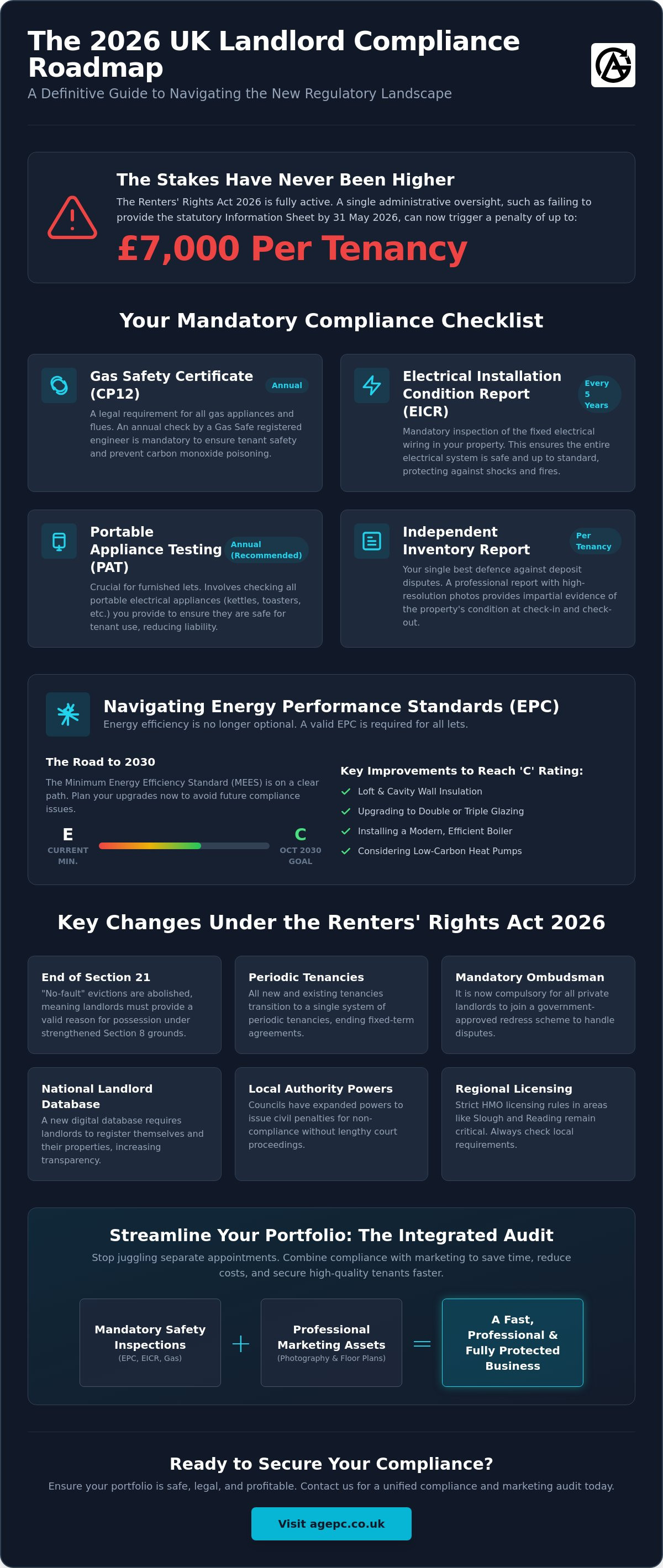
A single administrative oversight can now trigger a £7,000 fine per tenancy. With the Renters' Rights Act 2025 fully active as of May 1, the margin for error has vanished. Staying ahead of a landlord compliance checklist UK wide used to be a simple seasonal task. In 2026, it's a high-stakes digital operation. You're likely juggling expiring EPCs, annual Gas Safety checks, and five-year EICR requirements whilst trying to find reliable assessors in Slough, Reading, or Windsor.
It's exhausting to track every moving part when the rules change this fast. We know you want peace of mind without the friction of complex admin. This guide provides a definitive roadmap to master the 2026 regulatory landscape. You'll learn how to secure your legal safety, avoid deposit disputes, and use compliant documentation to make your property marketing more efficient. We'll break down mandatory certificates and the new National Landlord Database requirements to ensure your business remains fast, professional, and fully protected.
Key Takeaways
- Navigate the Renters' Rights Act with a definitive landlord compliance checklist UK to manage the transition to periodic tenancies and the new mandatory Ombudsman scheme.
- Protect your investment by synchronising annual Gas Safety checks, five-year EICR certificates, and the latest PAT testing requirements for furnished lets.
- Identify specific licensing obligations in Slough and Reading to avoid heavy local authority fines and ensure your property is legally ready for the market.
- Streamline your operations with a unified audit model that captures professional photography and floor plans alongside your mandatory safety inspections.
Defining UK Property Compliance: Legal Obligations in the 2026 Landscape
Property compliance is the strict adherence to safety, environmental, and administrative laws. It isn't just a suggestion. In 2026, the shift from voluntary best practice to mandatory legal requirements is complete. Your landlord compliance checklist UK is now a critical business document. It protects your assets from the expanded enforcement powers of local authorities in Slough and Reading. These councils now have the authority to issue significant civil penalties for properties that fail to meet national standards.
Landlords hold a fundamental duty of care to their tenants. This legal obligation is anchored in the Landlord and Tenant Act 1985, which mandates that all dwellings are fit for human habitation at the start of and throughout a tenancy. Meeting these standards isn't just about ethics; it's about avoiding the financial ruin of litigation. Failure to provide the statutory Renters’ Rights Act Information Sheet by the May 31, 2026 deadline, for example, can result in a fine of up to £7,000 per tenancy.
The Renters’ Rights Act 2026: Phased Implementation
The new legislation came into force on May 1, 2026, ending Section 21 evictions and moving all tenancies to a periodic model. This change has placed property condition under the microscope. Local councils now possess expanded enforcement powers to inspect properties and issue fines without lengthy court delays. Maintaining comprehensive property compliance is your best defence. It provides a documented audit trail that shields you against deposit disputes and ensures you can still use Section 8 grounds for possession when necessary.
Commercial vs. Domestic Compliance Frameworks
Compliance requirements vary significantly depending on the property type. Residential lets in Reading focus heavily on tenant safety and habitability. Conversely, commercial premises in Maidenhead require more frequent fire risk assessments and specialised energy performance reviews. Houses in Multiple Occupation (HMOs) face the strictest scrutiny. If you manage an HMO with five or more occupants in Slough, mandatory licensing remains a non-negotiable requirement. These high-density homes demand more frequent inspections and rigorous safety certification than standard single-family dwellings.
The Critical Compliance Certificates: EPCs, PAT Testing, and Inventories
Securing the right certificates is the backbone of your landlord compliance checklist UK. These documents aren't just paperwork; they're your legal safety net. In 2026, the scrutiny on property standards is intense. You must hold valid documentation before a tenant moves in to avoid fines and protect your right to possession. This proactive approach reduces friction and builds trust with high-quality tenants from the start.
Energy Performance: Navigating MEES and EPC C Targets
A valid domestic epc is mandatory for every residential let. Currently, the Minimum Energy Efficiency Standard (MEES) is rating 'E'. However, the roadmap is clear: properties must hit rating 'C' by October 2030. To reach this, consider energy performance certificate improvements like loft insulation, heat pumps, or double glazing. Commercial assessments differ from domestic ones. They often involve more complex HVAC systems and require assessments every ten years, or sooner if the building undergoes significant structural changes.
Electrical Safety: PAT Testing for Landlords
If you provide a furnished property, PAT testing for landlords in Reading is a vital safety measure. This process involves a formal inspection of all portable electrical appliances to ensure they're safe for tenant use. It's an essential shield against liability. Whilst the EICR covers fixed wiring, PAT testing focuses on the items your tenants touch daily. High-risk items like kettles or heaters should be checked annually to maintain a gold standard of safety and prevent electrical fires.
Protecting Deposits with Independent Inventories
Independent inventory reports are the only reliable way to resolve tenancy deposit disputes in Windsor. A professional report documents the property condition at both check-in and check-out with high-resolution photos and detailed descriptions. This evidence is critical when adjudicators evaluate "fair wear and tear" against the UK Government Landlord Responsibilities. Without a detailed report, you'll struggle to claim for damages. You can book your professional inventory alongside your safety checks to save time and streamline your workflow.
Floor plans also act as a secret weapon for landlords. They provide the spatial evidence needed for HMO applications whilst doubling as a high-value marketing asset. Clear 2D or 3D plans help prospective tenants visualise the space. This reduces wasted viewings and helps you secure a commitment faster.
Regional Compliance Strategies: Slough, Reading, and the Thames Valley
National standards provide the foundation, but regional nuances define your actual risk. In Slough, additional and selective licensing schemes are currently under review, making it critical to monitor local council updates closely. However, mandatory HMO licensing for properties with five or more occupants remains strictly in force. Using a Comprehensive Landlord Compliance Checklist helps you track these moving parts across different jurisdictions. Local environmental factors in the Thames Valley, such as specific damp risks in riverside properties, can also impact your energy scores. A local assessor who understands these regional property archetypes is essential for an accurate EPC rating.
Navigating Borough-Level Licensing and Regulations
HMO licensing requirements shift significantly as you move across West London. Hounslow, Ealing, and Hayes each maintain distinct thresholds and fee structures for additional licensing. Staying updated with local council "Article 4" directions is essential if you plan to convert properties or change usage. Localised monitoring ensures landlords in Wembley and Harrow remain ahead of borough-level changes before they become costly liabilities. Proactive checks prevent the £30,000 financial penalties often associated with unlicensed HMO operations.
The Importance of Speed in the Local Market
The Reading rental market moves at a breakneck pace. High demand from tech-sector professionals means properties often let within days. In this environment, a rapid EPC turnaround isn't just a convenience; it's vital for securing high-value tenancies in Watford and beyond. Organising separate visits for photography, floor plans, and safety checks is a logistical nightmare in congested West London areas. It leads to longer void periods and frustrated prospective tenants. You need a streamlined approach to stay competitive.
Choosing a "one-stop" local provider solves this friction. You can capture all mandatory safety data and marketing assets in a single visit. This efficiency keeps your landlord compliance checklist UK up to date whilst your property is already live on portals. It is the fastest way to transition from a vacant unit to a revenue-generating asset. To get your property market-ready without the wait, book your local compliance audit today.
Streamlining Your Portfolio: The Integrated Compliance and Marketing Audit
Traditional property management often treats safety checks and marketing as separate, disjointed tasks. This approach creates unnecessary friction and extends property void periods. In 2026, the most efficient landlords use a unified visit model. By capturing compliance data and marketing assets simultaneously, you eliminate multiple appointments and reduce tenant disruption. Your landlord compliance checklist UK becomes a streamlined engine for growth rather than a series of administrative hurdles.
Bundling services like EPCs with 2D and 3D floor plans isn't just about convenience; it's about cost-efficiency. A single visit allows an assessor to map the property for energy performance whilst simultaneously generating accurate spatial data. This integrated approach ensures that professional real estate photos Reading service users receive have a direct context. High-quality imagery enhances the value of your compliance reports by providing a visual record that matches your technical certificates. It creates a cohesive digital twin of your property that serves both legal and commercial needs.
Step-by-Step: The Integrated Compliance Visit
- Step 1: Book a comprehensive assessment. Schedule a single visit that covers your mandatory EPC, PAT testing, and professional Inventory report to ensure full legal coverage.
- Step 2: Prepare the property for capture. Ensure the property is clean and staged for high-quality marketing photography during the same time slot to maximise visual appeal.
- Step 3: Rapid digital delivery. Receive all your verified digital assets and compliance certificates within a 24-hour window, allowing you to list the property on major portals immediately.
Leveraging Compliance for Better Marketing Results
Compliance documentation is a powerful marketing tool when used correctly. A high EPC rating is now a primary selling point for Windsor listings, as tenants increasingly prioritise energy efficiency to manage utility costs. Highlighting a 'C' rating or above in your property description attracts eco-conscious, long-term renters. It signals a well-maintained, premium property that offers better value for money.
The psychological impact of a professional inventory report shouldn't be underestimated. It demonstrates to high-calibre tenants that you're a serious, organised landlord who values transparency. When you combine this with 3D floor plans, you provide an immersive experience that reduces unnecessary viewings. Prospective tenants can explore the layout and condition remotely, ensuring that those who do book a physical viewing are already highly motivated to sign. This transparency builds trust and accelerates the entire letting process from first click to move-in day.
Secure Your Property's Future in the 2026 Market
Mastering the 2026 landscape requires more than just ticking boxes. It's about integrating legal safety with commercial appeal. You've seen how the Renters' Rights Act has raised the stakes and how regional licensing in the Thames Valley demands local expertise. Using a robust landlord compliance checklist UK ensures you avoid heavy penalties whilst keeping your property attractive to high-calibre tenants. Proactive management is your best defence against disputes and long void periods.
Since 2012, we've helped landlords across Slough, Reading, and the Thames Valley navigate these complex shifts. We provide a genuine one-stop shop for everything from accredited Domestic and Commercial EPCs to professional photography and inventories. Don't let administrative friction delay your next tenancy. Book your comprehensive 2026 property compliance audit today to protect your investment and accelerate your results. Our team is ready to deliver the verification and speed you need to stay competitive.
Stay proactive. Stay protected. Your portfolio deserves the peace of mind that comes from professional, authoritative verification.
Frequently Asked Questions
What is the minimum EPC rating for rental property in 2026?
The minimum energy efficiency rating for rental properties in 2026 is currently 'E'. Whilst the government has set a target for all rental properties to reach a minimum rating of 'C' by October 2030, you must ensure your property doesn't fall below 'E' to legally let it today. Upgrading early to a 'C' rating is a smart way to future-proof your investment and attract energy-conscious tenants.
Is PAT testing a legal requirement for UK landlords in 2026?
PAT testing isn't a standalone legal requirement for all tenancies, but it's the most reliable way to meet your "duty of care" regarding electrical safety. For furnished lets, you're responsible for ensuring every provided appliance is safe for use. Many local councils and insurance providers now include regular PAT testing as a core component of their landlord compliance checklist UK standards to mitigate fire risks.
How often should I renew my commercial EPC certificate?
A commercial EPC is valid for ten years. You must renew it sooner if you carry out significant building works or modify the heating, ventilation, and air conditioning systems. In the 2026 market, many commercial landlords choose to refresh their certificates after energy-saving upgrades to demonstrate the building's improved efficiency to prospective high-value commercial tenants.
Can landlords rent without an EPC under the Renters’ Rights Act?
No, you cannot legally market or rent a property without a valid EPC under the Renters' Rights Act 2025. You're required to provide a copy of the certificate to the tenant before the tenancy agreement is signed. Failure to provide this document can lead to financial penalties and will prevent you from using specific Section 8 grounds for possession if a dispute arises.
What happens if my property compliance certificates have expired?
Expired certificates expose you to severe financial penalties and leave your property legally "un-lettable". If your Gas Safety, EICR, or EPC certificates lapse, your landlord insurance is likely voided and you lose the right to regain possession of your property through the courts. Local authorities in Slough and Reading are increasingly proactive in identifying and fining landlords with non-compliant documentation.
What does an independent inventory clerk look for during an inspection?
An independent inventory clerk performs a detailed assessment of the property's decorative condition, fixtures, and overall cleanliness. They record everything from the state of the carpets to the functionality of kitchen appliances and take definitive meter readings. This professional documentation is the only evidence that effectively resolves deposit disputes by distinguishing between "fair wear and tear" and actual tenant damage.
Important Information
The information provided in this article is for general guidance and informational purposes only and does not constitute legal, financial, or professional property advice. While AG Site Solutions aims to keep all content accurate and up to date, property regulations, landlord obligations, EPC requirements, and housing legislation may change over time.
Readers should always seek professional advice or consult the relevant authorities before making decisions relating to property compliance, tenancy matters, Energy Performance Certificates (EPCs), landlord responsibilities, or legal obligations.
Some articles may be created or assisted using AI-supported content tools and are reviewed and enhanced using real industry experience and property compliance knowledge.
For professional assistance, quotations, or compliance support, please contact AG Site Solutions directly via agepc.co.uk